David Lawrence and Harry Shukman
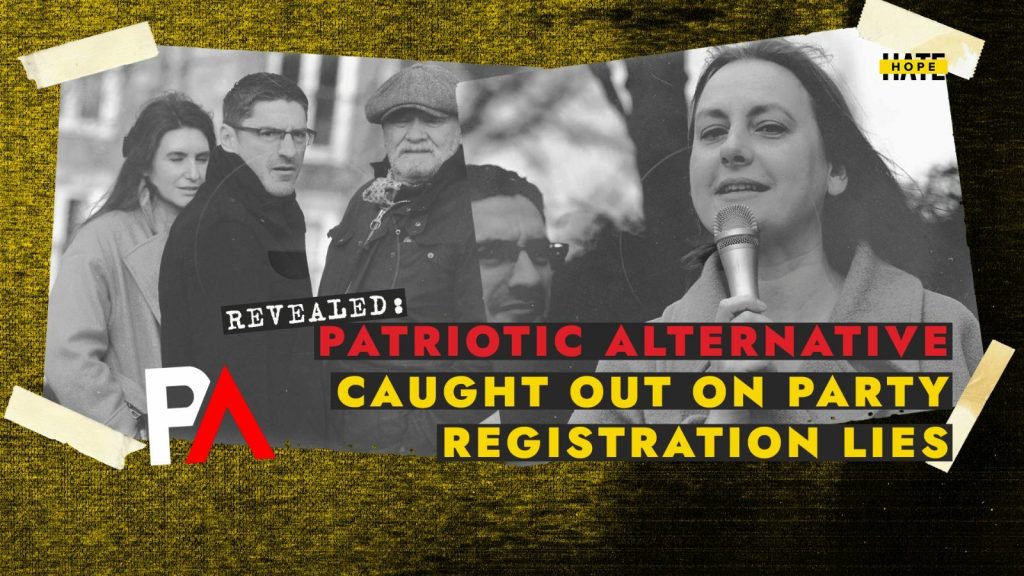
Earlier this summer, the leaders of the neo-Nazi group Patriotic Alternative (PA) made an “explosive” announcement. Mark Collett, the self-described “Nazi sympathiser”, and his deputy Laura Towler went on a livestream to describe a ruse they had apparently pulled over the Electoral Commission.
Having repeatedly failed to register PA as a political party, they wanted to prove that the Electoral Commission was deliberately sabotaging them. According to Towler, they removed any mention of PA from their application, called their new organisation the “Identity Party”, and sent in their paperwork. “We kept everything else the same and it passed the first time,” she said. “So if that isn’t evidence that they have it out for Patriotic Alternative, I don’t know what is.”
HOPE not hate has reviewed the Identity Party’s application documents, released under freedom of information laws, and can reveal that Towler and Collett were lying. The applications were substantially different.
PA’s leadership has long faced accusations of deliberately spoiling their applications to register in favour of earning money from livestreams. Our analysis suggests PA’s attempted gotcha, which inadvertently reveals the lengths they went to in order to not get registered, will ultimately backfire.

It was meant to be a coup for PA when it successfully registered the Identity Party in November 2024. Its nominal leader is Craig Buckley, a PA activist from Wigan, and Neil MacPhee, an unknown figure, is listed as the party treasurer. PA’s bosses would not mention the existence of the Identity Party until May 2025, when they held a triumphant livestream to accuse the Electoral Commission of undermining them.
“We are living in a banana republic,” declared Collett. “The Electoral Commission were doing everything in their power to prevent us from registering as a political party.”
Addressing long-running claims that it was Collett, not the Electoral Commission, who had scuppered his own applications to turn PA into a political party, he said: “This really proves everything we were saying to you guys. We knew they were messing us around.” Towler insisted they had been honest with their members on this topic, adding: “It’s always been the truth.”
Since launching in 2019, PA has submitted six applications to register, and failed each time. It has been humiliated by the Homeland Party and the National Rebirth Party (NRP), which both registered within a year of splitting from PA. Collett responded by dismissing elections as “a waste of time, money and resources” and lashing out at his rivals, notably Homeland leader Kenny Smith (“a morbidly obese slob”) and NRP leader Alek Yerbury (“delusion, narcissim [sic] and failure rolled into one”).
To hit back, Collett and Towler claimed to have sent an identical application for a paper organisation called the Identity Party — the only difference being their names weren’t on it — and passed. But that’s not the real story. We have compared the Identity Party’s application with those made by PA. They look completely different.
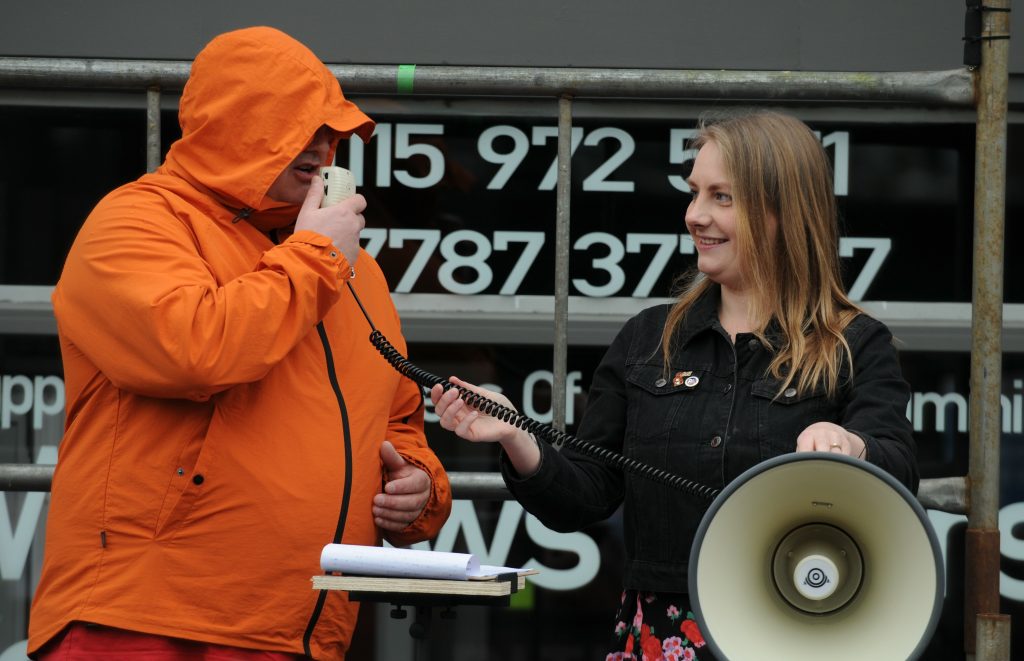
The reasons why PA’s applications were rejected kept changing. In the beginning, the party submitted a constitution and financial scheme riddled with errors. The constitution in a subsequent application did not meet equalities law. With their final attempt, Collett and Towler had once again introduced errors with the constitution and financial scheme.
By contrast, the Identity Party’s constitution, financial scheme, and commitment to equalities law all met the standard and were approved.
When PA applied under its own name, the Electoral Commission rejected it on the grounds that Collett had essentially made it impossible for any members to challenge him for the leadership. This would make the party undemocratic and break electoral law. Collett, according to Electoral Commission documents, had wanted to institute an eligibility requirement that the chairman had to have been a party member continuously for at least two years. But according to PA’s own submission, the group had no party membership structure when the application was sent in, meaning Collett would automatically be chairman without anyone to challenge him.
One of PA’s later applications discriminated against LGBT+ people and religious minorities, mentioning a ban on religious symbols in private businesses, plus a rule that “no public body will promote any alternative as either equal or superior to the traditional family”.
It seems odd that Collett would have introduced such a detail in this later application. Surely a veteran activist, who counts the solicitor Robin Tilbrook as a friend and adviser, would know that would be grounds for rejection? In any case, there was no such mention of a policy in the Identity Party’s application, which even said membership was open to anyone regardless of “race, religion, sexuality, gender, ethnicity, etc”.
All these failures, and Collett’s continued claims of sabotage, are especially bemusing as the paperwork shows that behind the scenes, the Electoral Commission actually did much to help PA register.
For example, after a rejection, one staffer wrote in a released memo: “I support the proposal that we seek to advise the applicant in the future.” Another said they wanted to “support the applicants to understand the current and repeat barriers experienced”. A third wrote: “It is clear that we have already provided substantial advice and assistance to the applicants over a significant period of time.” A fourth noted they had given PA “large amounts of guidance” and hinted internally at confusion that “this issue has occurred multiple times”.
An Electoral Commission spokesperson told HOPE not hate:
“The Identity Party’s application met the legal criteria and was therefore approved. In the past, Patriotic Alternative applications have been rejected as the party’s constitution and financial scheme were not compliant with the law. The constitution did not properly set out the structure and organisation of the party, and the proposed financial scheme, which sets out how they will comply with the law on spending, donations and accounting, had not been adopted.”
Collett and Towler insist the Electoral Commission has been obstructing them. “They stopped us because they didn’t want us getting a foothold in the market, establishing ourselves electorally and starting to win a few council seats and building a national political party,” he said.
The evidence is staring him — and his members — in the face. It’s certainly not the first time that Collett and Towler have been exposed for dishonesty. How much longer can they keep up this lie before their remaining activists start turning on them?

Prefer to listen? Click the play button to hear the audio version. Harry Shukman Reform UK is staffed by oddballs and enigmas, but none odder…