by HOPE not hate Data Desk
Today, more people consume news through social media than through traditional journalism. Therefore, the information that influences public opinion is increasingly shaped by algorithms, engagement, and amplification over accuracy.
HOPE not hate’s Data Desk is monitoring this shift in real time, and can reveal how a small network of high-profile accounts systematically floods the digital landscape with coordinated, manufactured and often inaccurate, misleading narratives.
The sheer scale and speed of this phenomenon has the potential to undermine how well informed the public are and, by extension, damage our democracy. We are living through an experiment as to the cumulative effects of misinformation.
Social media platforms reward content that provokes strong emotional reactions. Outrage, fear, misinformation and conspiracy consistently outperform factual content in terms of reach, because attention has become a commodity. Increasingly, misinformation which co-opts legitimate grievance is being adopted as a business model. Driven by highly organised online networks, AI generation, automated bot networks, and inadequate platform moderation, misleading narratives spread fast.
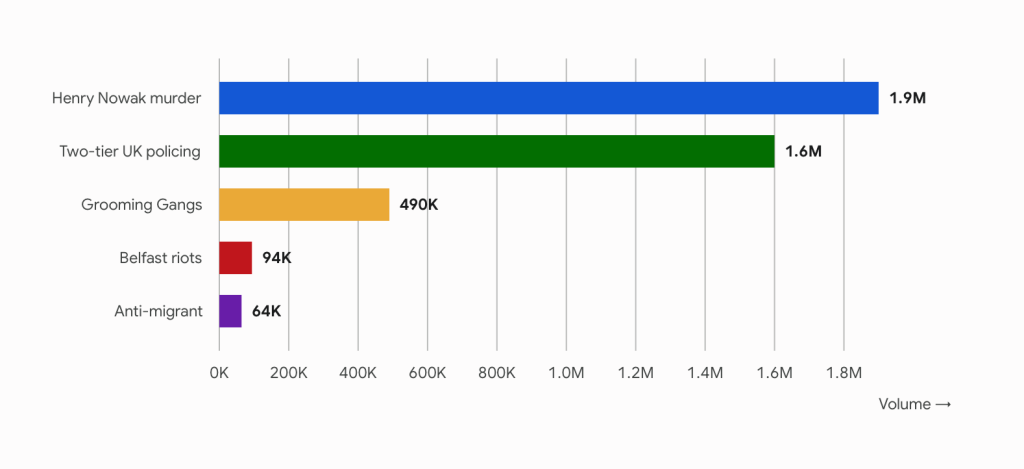
To quantify how fast and far this epidemic reaches, we analysed a snapshot sample of viral posts across five recurring themes peddled by key far-right agitators. Themes include anti-migration, rape gangs, two-tier policing, the Henry Nowak case, and the recent Belfast riots.
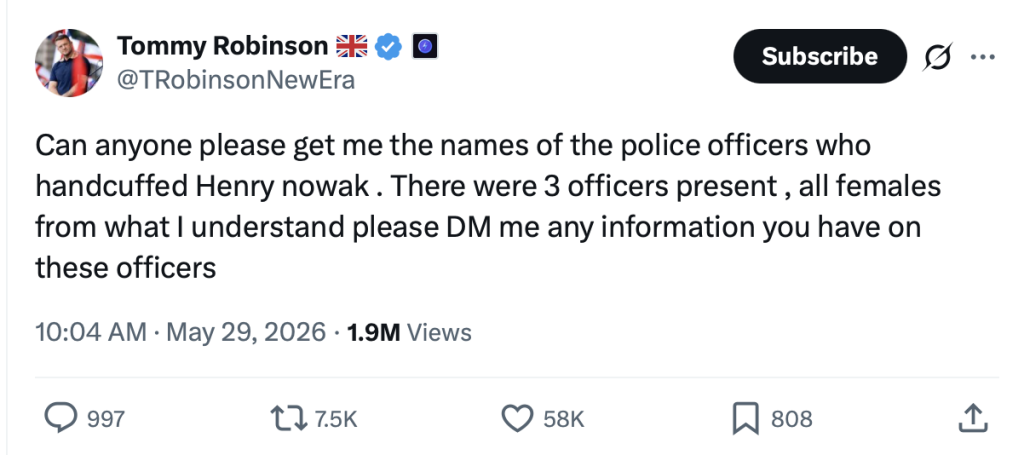
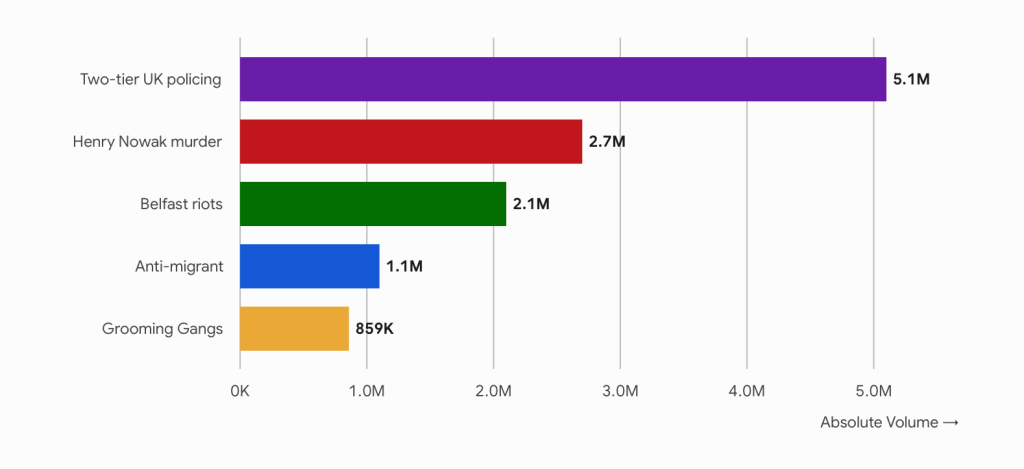
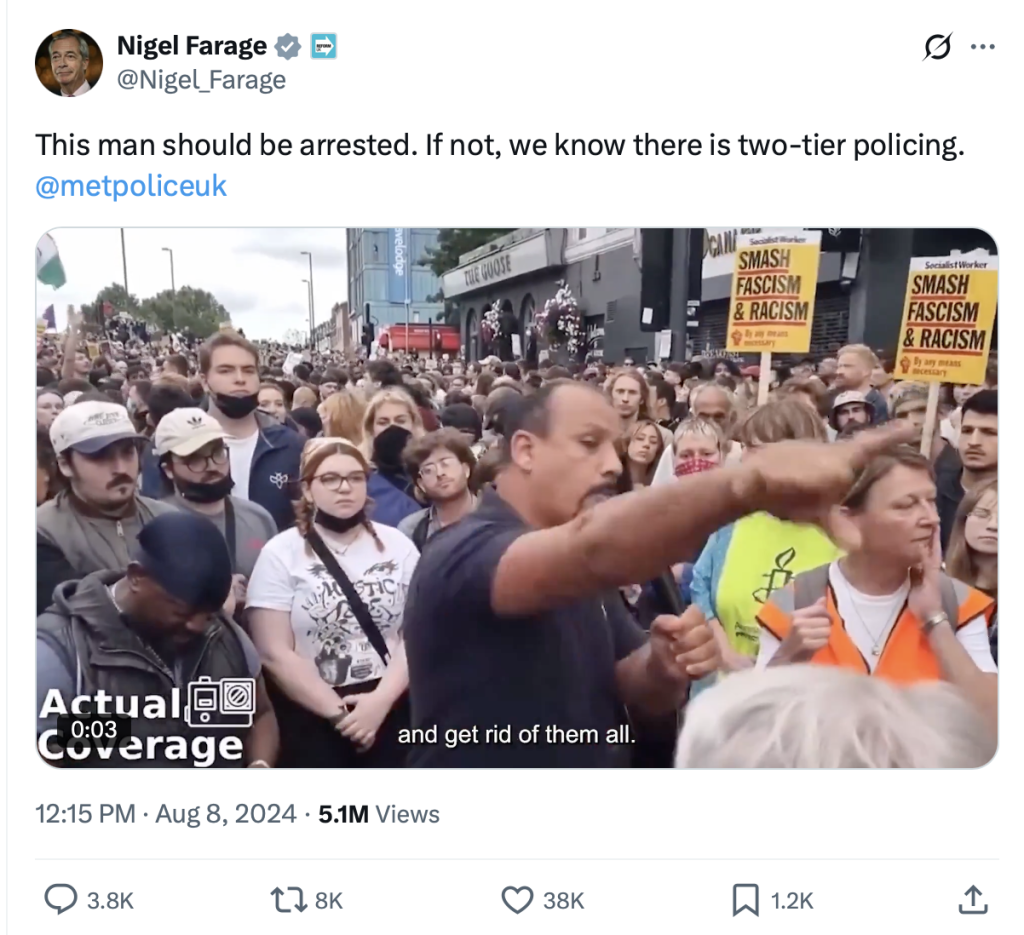
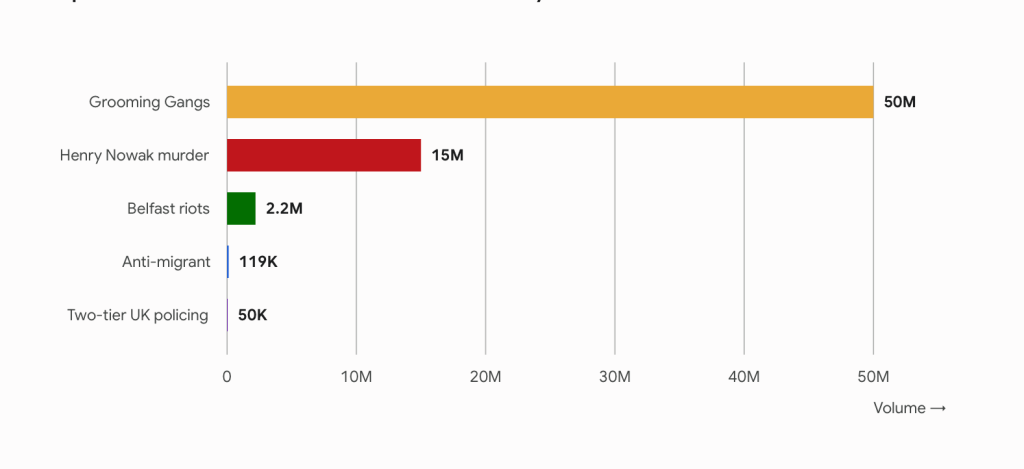
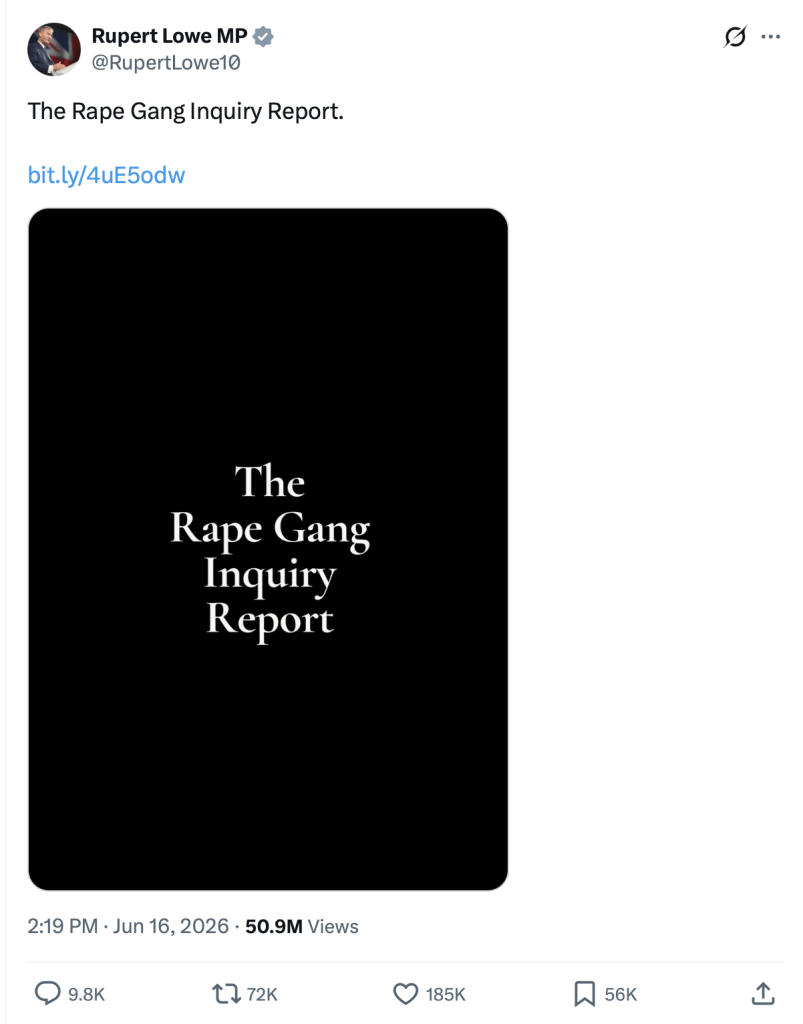
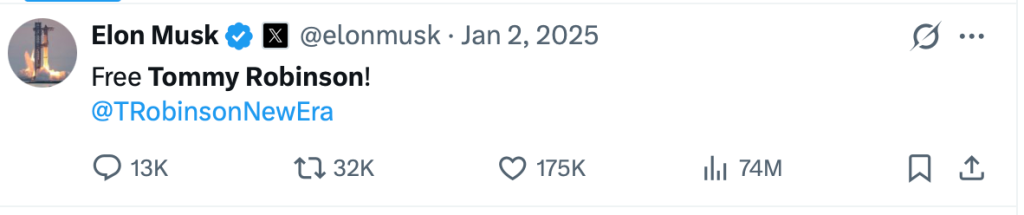
Based on the most viral post for each agitator by theme, the charts below show the reach of single posts across these five narratives on social media platform X.
Tommy Robinson
Nigel Farage
Rupert Lowe
Elon Musk
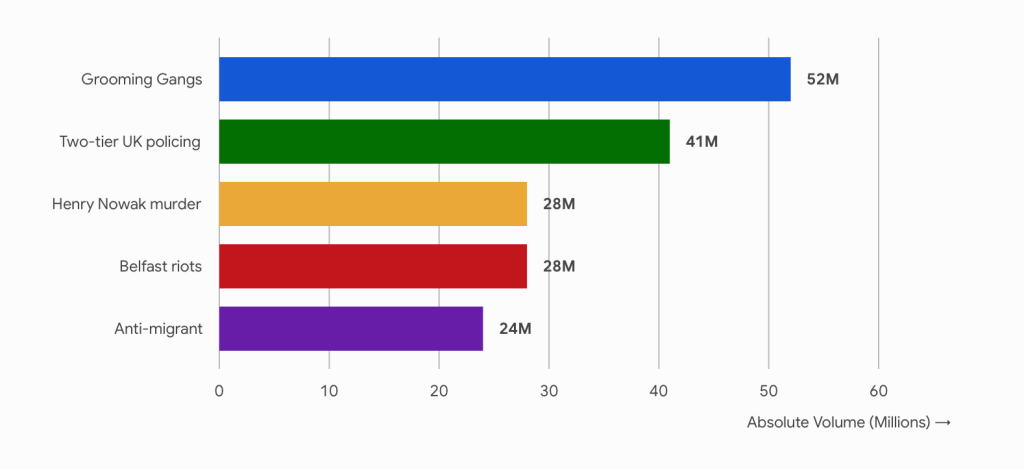
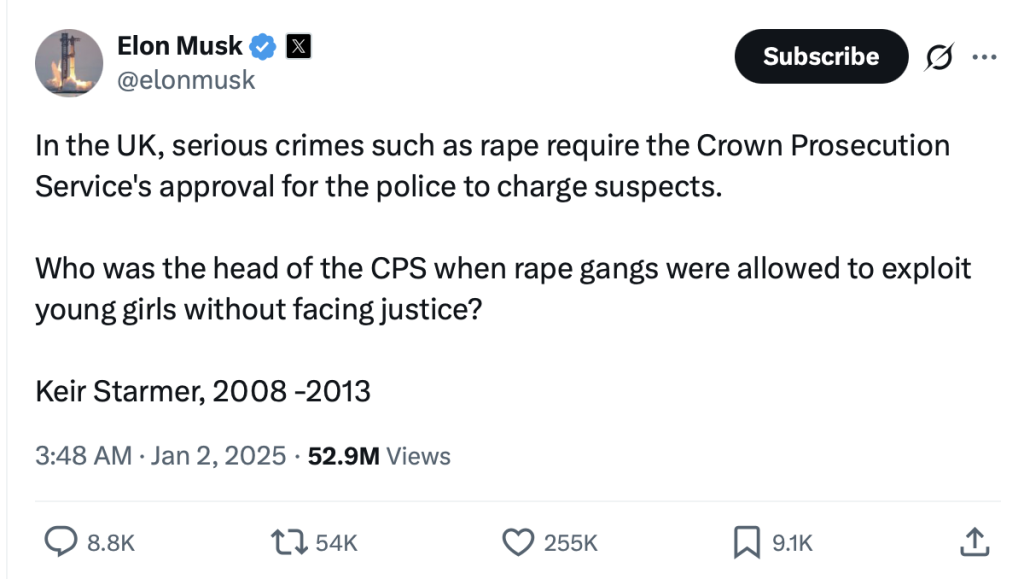
The most concerning aspect of this type of divisive content and its massive reach is not necessarily a single viral lie, but the cumulative effect of sustained exposure to these posts and ones like them. Wider research refers to this as the “illusory truth effect” where repeated statements become believable at scale simply through familiarity.
We see this clearly when comparing some of this online rhetoric to reality. Take UK immigration as an example:
A key concern is that factual corrections or counter narratives online can’t compete with the speed of this type of viral content. The reach of these posts show how these four individuals alone maintain an average collective reach of nearly 13,000,000 impressions per narrative cluster.
To put this into context, the entire adult population of the United Kingdom is approximately 69 million people. While social media “impressions” include global users, automated bots, and repeat scrolls, a metric exceeding 50 million means these narratives totally eclipse other information sources. For example, Sky News reaches an average of 17% of UK adults (9 million people) across their entire multi-day baseline footprint.
If a single high-velocity post on X routinely pulls 12.8 million views, it instantly outperforms the total average active reach of an entire national 24-hour news broadcaster. While our research is ongoing to build a larger data set on this subject for wider meta-analysis, with numbers this high, the sheer volume of data guarantees reliability.
Next we looked at whether people were engaging with this content. Paradoxically, on X, reach and engagement is not dependent on people “liking” content but in fact rewards conflict, algorithmically boosting this type of content even where people disagree with the original post. So, in addition to flooding social media feeds with their content, these posts typically achieve high engagement (retweets) often by other sympathetic far right, high follower accounts. This is a common tactic which sees these high-follower accounts tagging each other to amplify their messaging.
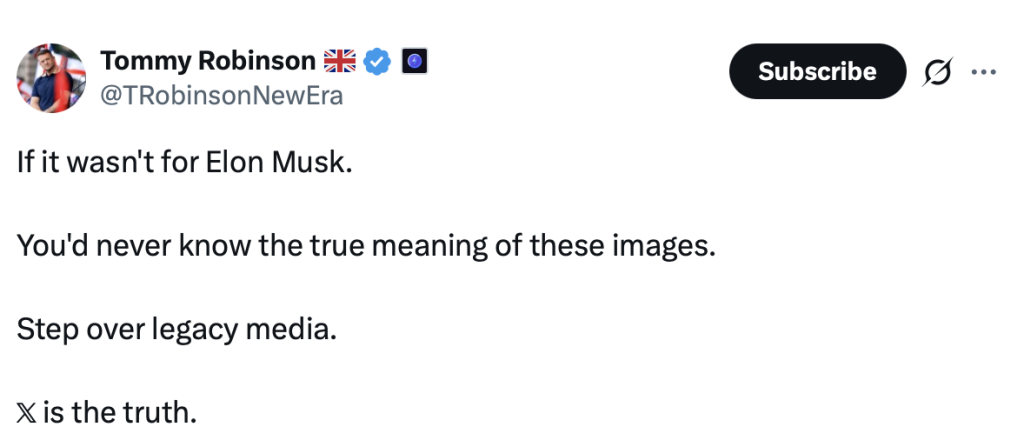
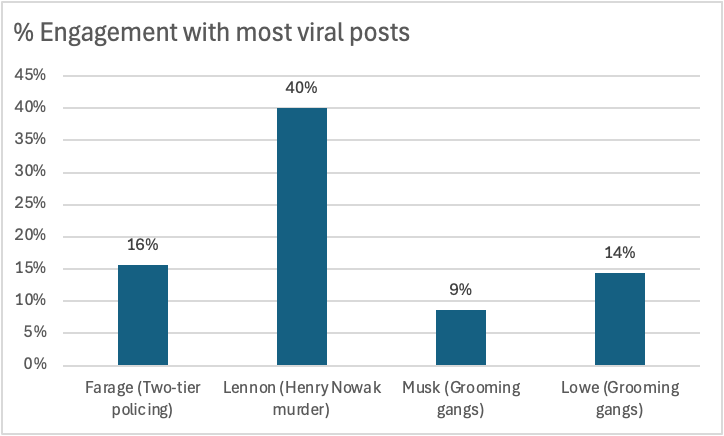
Lennon’s post about the murder of Henry Nowak generated the highest level of engagement, despite having the lowest overall reach of the four. That said, whether counted individually or collectively, the mass visibility of this content is increasingly typical of far-right accounts on X.
To label this divisive rhetoric as a spontaneous, grassroots phenomenon is inaccurate. This content is heavily manufactured, algorithmic, and targeted, with persistent exposure gradually shifting the boundaries of public debate, making extreme claims appear ordinary to everyday users. Understanding and quantifying this distortion is essential if we are to protect the integrity of informed public choice.
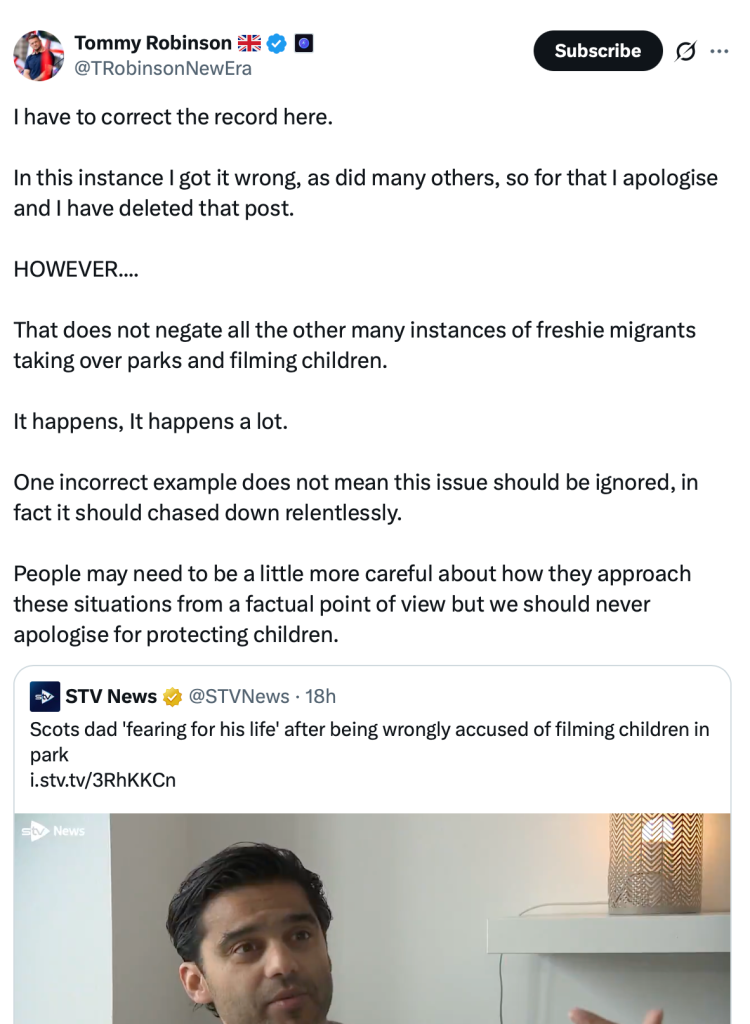
The reach of this disinformation is clear in another recent post from Lennon (July 2026), who falsely accused a man of filming children in a park. By the time he deleted it hours after issuing a retraction, the post had already been viewed more than 138,000 times. The damage was compounded when his correction, which reused footage from the original post, racked up a further 43,000 views.
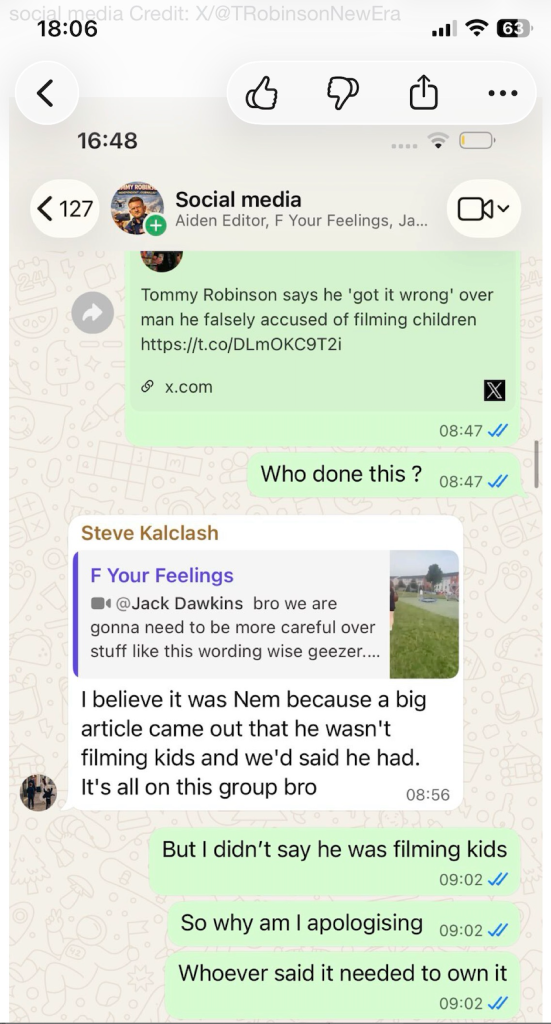
Then in a further weird twist, Lennon retracted his apology inexplicably blaming his “admins” for the false claim despite it being his official account, passing the buck saying: “Whoever said it needs to own it”, a tactic that allows him to spread misinformation apparently without accountability.
This tactic of flooding social media with high volumes of manufactured friction distorts the electorate’s informed choices and in turn, corrodes the democratic process. Research also suggests that emotionally driven misinformation can encourage voters to support policies that may run contrary to their own economic interests by prioritising identity and grievance over evidence.
In other words, it’s not simply what is said online, but how often it is repeated, and how widely or quickly it spreads. Sustained exposure shapes public understanding and it’s precisely this tactic that ensures these brands of manufactured hate propaganda travel faster than the truth or informed debate. While social media makes users feel like active participants, the sheer scale of these posts risks reducing them to passive consumers.
Our Data Desk continues to compare leading far-right influencers, including Lennon, Farage, Lowe, Musk and others; testing how particular narratives are amplified across multiple platforms and the impact of this.
By measuring reach and engagement alongside factual accuracy, HOPE not hate can better understand how misinformation spreads, who benefits from it and how algorithmic amplification adversely shapes political discourse. One thing is very clear, even if a tiny fraction of those viewing this type of divisive content believe it or act on it, then we have a big problem.
Prefer to listen? Click the play button to hear the audio version. Harry Shukman Reform UK is staffed by oddballs and enigmas, but none odder…