Prefer to listen to this article? Press play to hear the audio podcast.
HOPE not hate can reveal that the neo-Nazi group White Vanguard has suffered a major split. A series of calamitous errors has cost the group half its membership, forced a change in leadership and left its future uncertain.
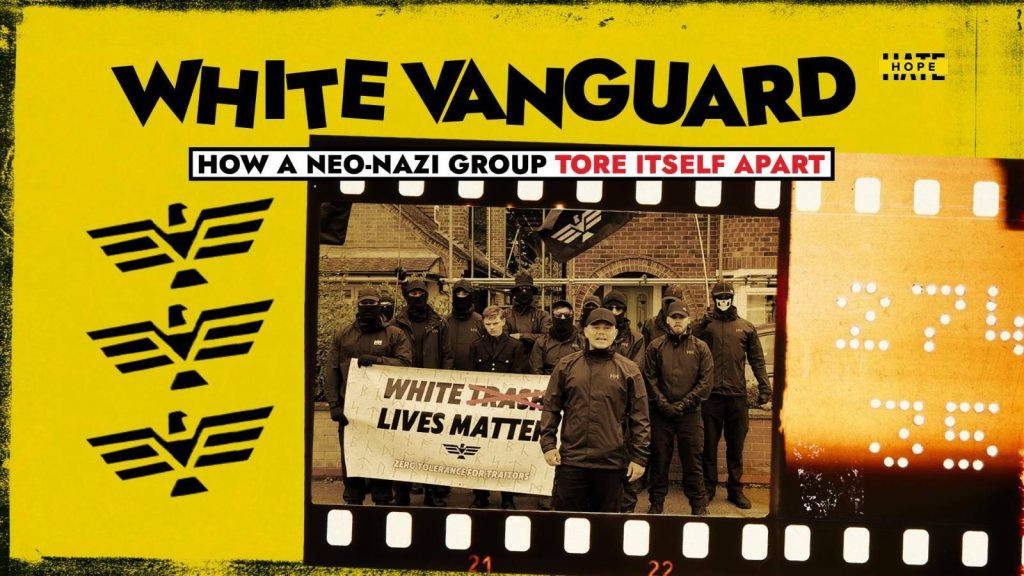
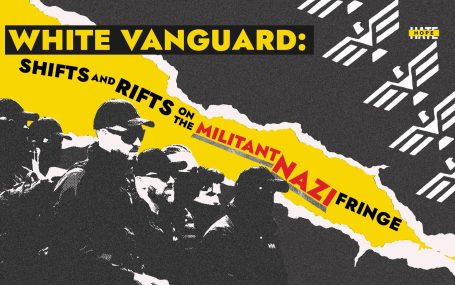
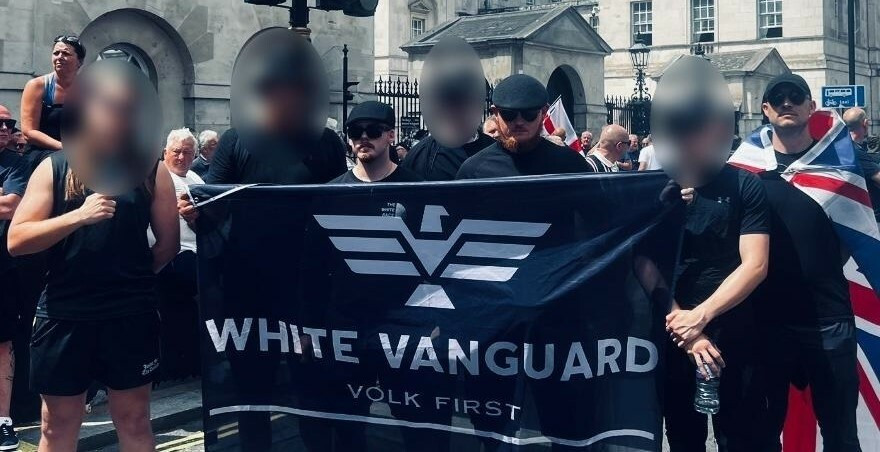
Since launching last March, White Vanguard (WV) has distinguished itself through its confrontational approach. Aiming to usher in a “National Socialist” revolution, the group’s 20-30 core activists drilled martial arts, hijacked public protests and intimidated local politicians while clad in black uniforms and balaclavas.
However, momentum collapsed last month when internal tensions culminated in a mass walkout, triggered by the arrest of co-leader Kai Cunningham. The handling of the arrest – as well as disdain for the other co-leader, Harrison Leworthy – has left WV half the size and without control of its own website.
HOPE not hate reports the rapid rise and collapse of White Vanguard.
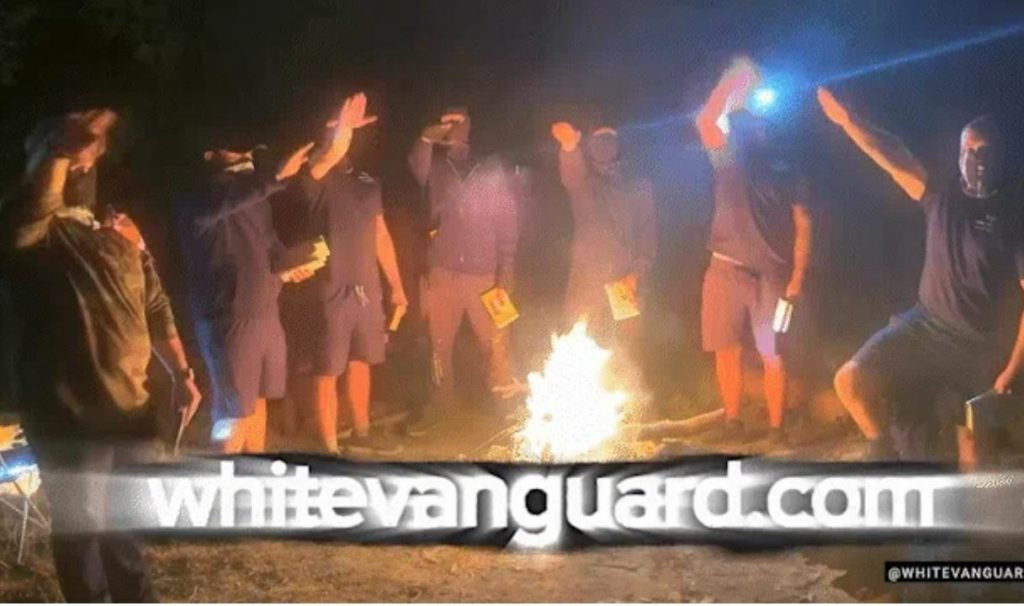
WV emerged from the remnants of the Youth Alliance (YA), a Christian nationalist outfit that launched in 2024 and folded within the year. YA, which initially had an anti-Muslim focus, sought to attach itself to the Tommy Robinson-led protest movement before radicalising into extreme antisemitism. The group dissolved following the riots that swept the country in the summer of 2024, which it had openly endorsed.
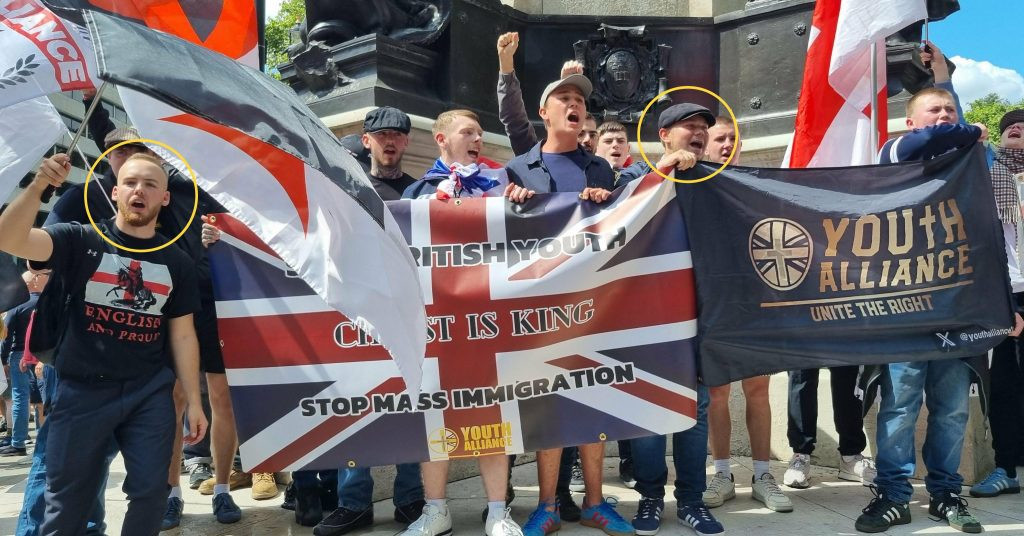
Regrouping under the WV banner, Cunningham and Leworthy — from Dagenham, London and Havant, Hampshire respectively — modelled their new organisation on the Australian National Socialist Network (NSN). Venerating NSN figurehead Thomas Sewell as a Hitler-like figure, WV borrowed the group’s uniform of black Helly Hansen jackets (the logo of which — “HH” — is seen as a reference to Hitler). Contact between the two organisations has since been established.
The group also mimics aspects of the Active Club Network, requiring members to physically train three times a week in an effort to cultivate a disciplined, elite activist cadre.
WV gained its first taste of publicity at a Britain First march in Birmingham last May, with footage circulating on social media of Cunningham bellowing into a megaphone about national socialism. Cunningham, a would-be corporate lawyer and former Reform UK member, became the public face of the group — a fact that would cause internal jealousy over time.
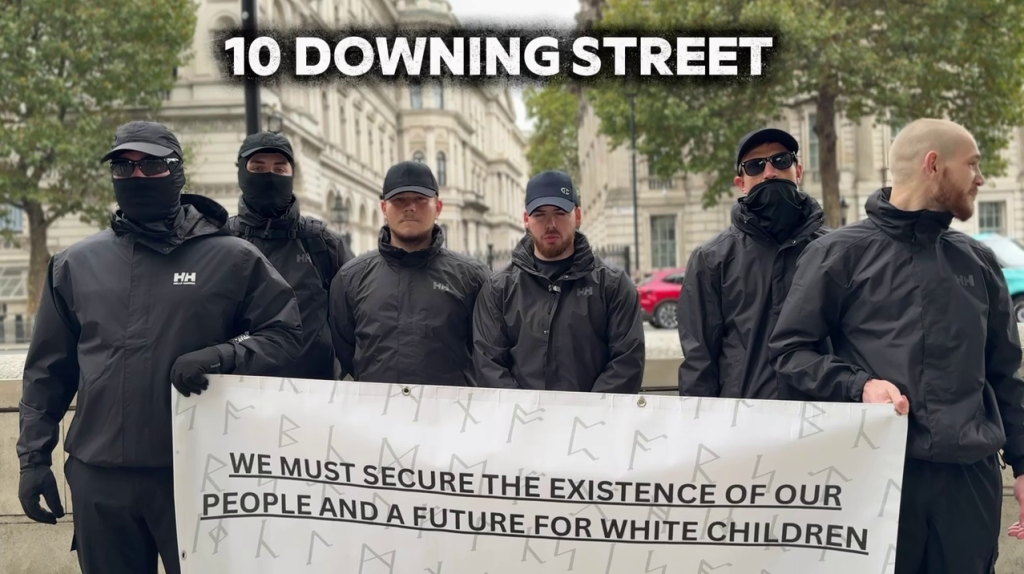
Establishing a small but active presence in London, the South and North of England and Wales, WV continued to hold media-baiting stunts. This included banner drops on the steps of the Senedd in Cardiff and outside the MI5 headquarters in London, as well as at the Australian Embassy in support of their hero Thomas Sewell.
Unsurprisingly, the group attracted violent individuals. This included Jay Barlow (AKA Glenn), who is also a member of Active Club London and has recent convictions for possession of a knife and racially aggravated harassment, on top of a four-year prison sentence for GBH following a knife attack in a supermarket in 2018.
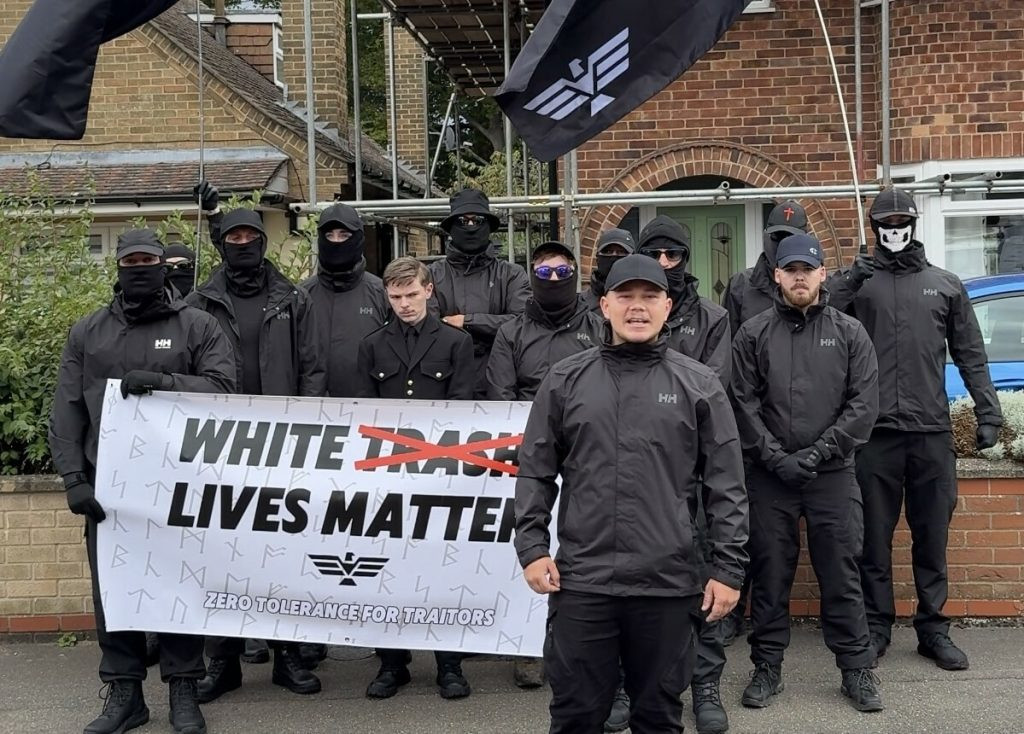
By autumn, WV had escalated to intimidating local politicians. In September, the group posted the details of a Peterborough councillor alongside the threat: “Traitors will suffer true consequences under real nationalist leadership.” Thirteen masked activists subsequently marched through the town shouting “White man! Fight back!” before assembling outside the councillor’s home, as Leworthy delivered an inflammatory monologue promising “total war” to the camera.
Activists also targeted a Labour councillor in Borehamwood who had criticised the “Raise the Colours” flagging campaign, labelling him a “Zionist Jew” and “traitor” and hanging Union flags outside what they believed to be his home (they had the wrong address).
We had previously predicted that WV was unlikely to last long term. Militant elements were driving the group in an ever-more radical direction, and it increasingly resembled National Action, a neo-Nazi group that was banned under anti-terror laws in 2016. Cunningham’s long-winded “legal statements” denouncing violence seemed unlikely to protect members when scrutiny intensified.
Behind the scenes, tensions had been simmering for months. Many members were frustrated at Leworthy, whose egotism, immaturity and argumentative personality had burned numerous bridges. The conduct of Leworthy, who often seemed more interested in spats with other fascists than pursuing WV’s own agenda, alienated many recruits and is partly responsible for WV’s high activist turnover.
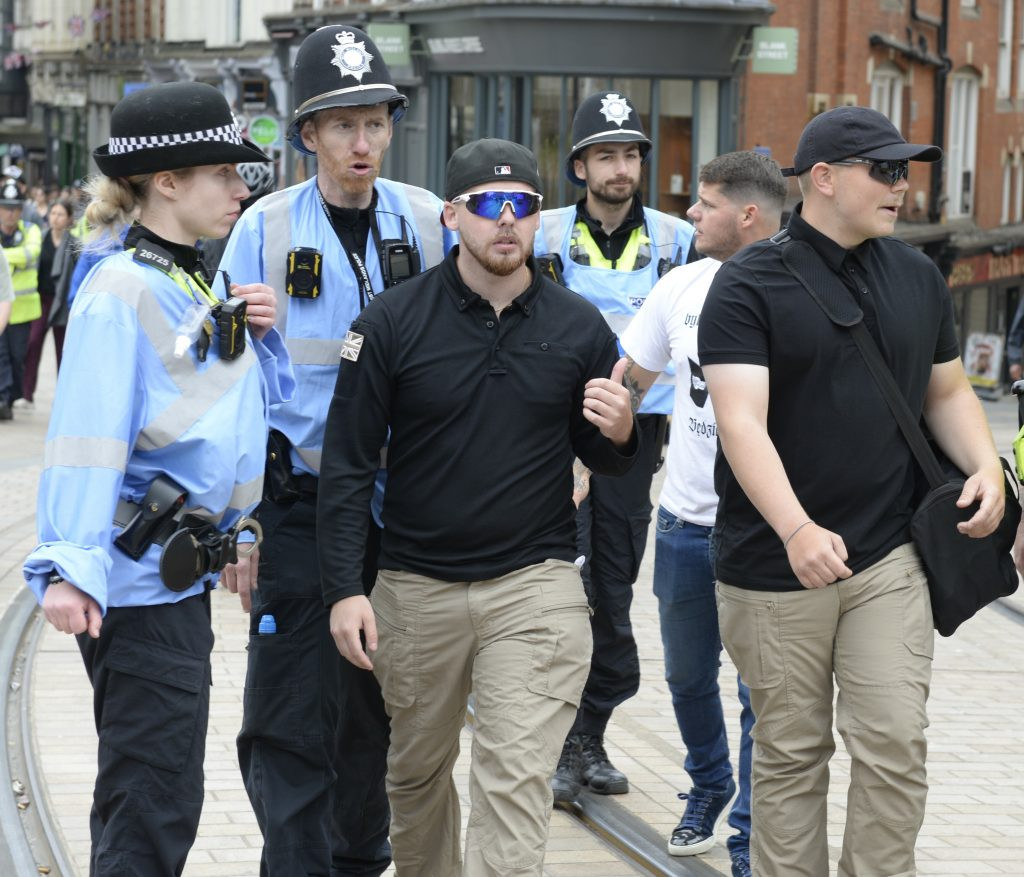
These tensions came to a head in November following Cunningham’s arrest on return from Northern Ireland, where he had hoped to establish a new branch. Suspicions that he had cooperated with the authorities caused panic among the membership, and WV announced that “Kai has officially stepped down from his position and left the movement for personal reasons.”
In reality, Cunningham remains at the helm of the organisation. However, a mass walkout followed, with WV claiming in a further statement that its website is “no longer under our administration”. Leworthy was subsequently forced to step down from leadership to appease the remaining members.
Dewsbury-based Jordan Widdop (AKA Widz), WV’s northern organiser, has stepped into national leadership alongside Cunningham. The group plans to relaunch this month, but is a diminished force and it is unclear how long its few remaining activists will remain before jumping ship to other vehicles.
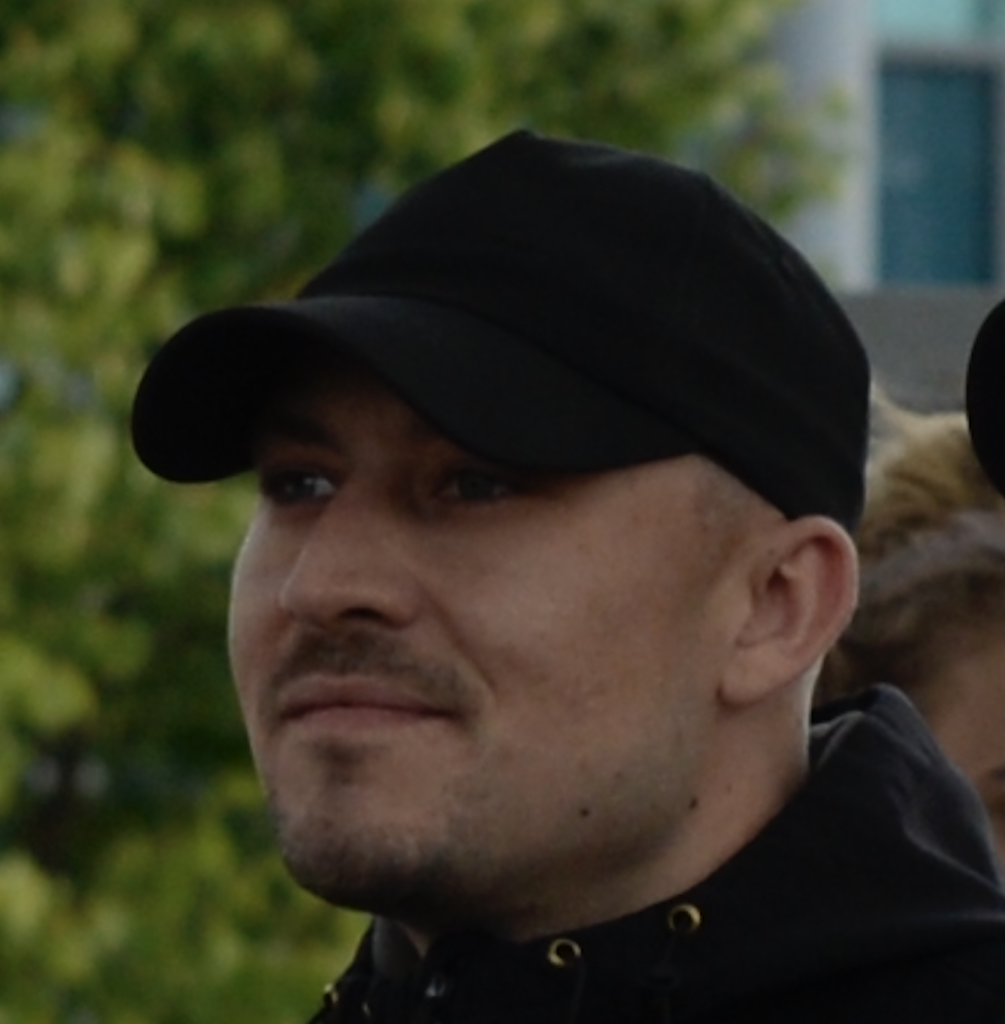
WV’s rapid rise and implosion follow a familiar pattern. Indeed, after YA, it is the second organisation that Cunningham and Leworthy have both founded and driven into the ground within the space of a year.
Militant tendencies, outsized egos and reckless escalation may generate attention, but they also attract scrutiny, fuel factionalism and hasten collapse.
Prefer to listen? Click the play button to hear the audio version. Harry Shukman Reform UK is staffed by oddballs and enigmas, but none odder…