
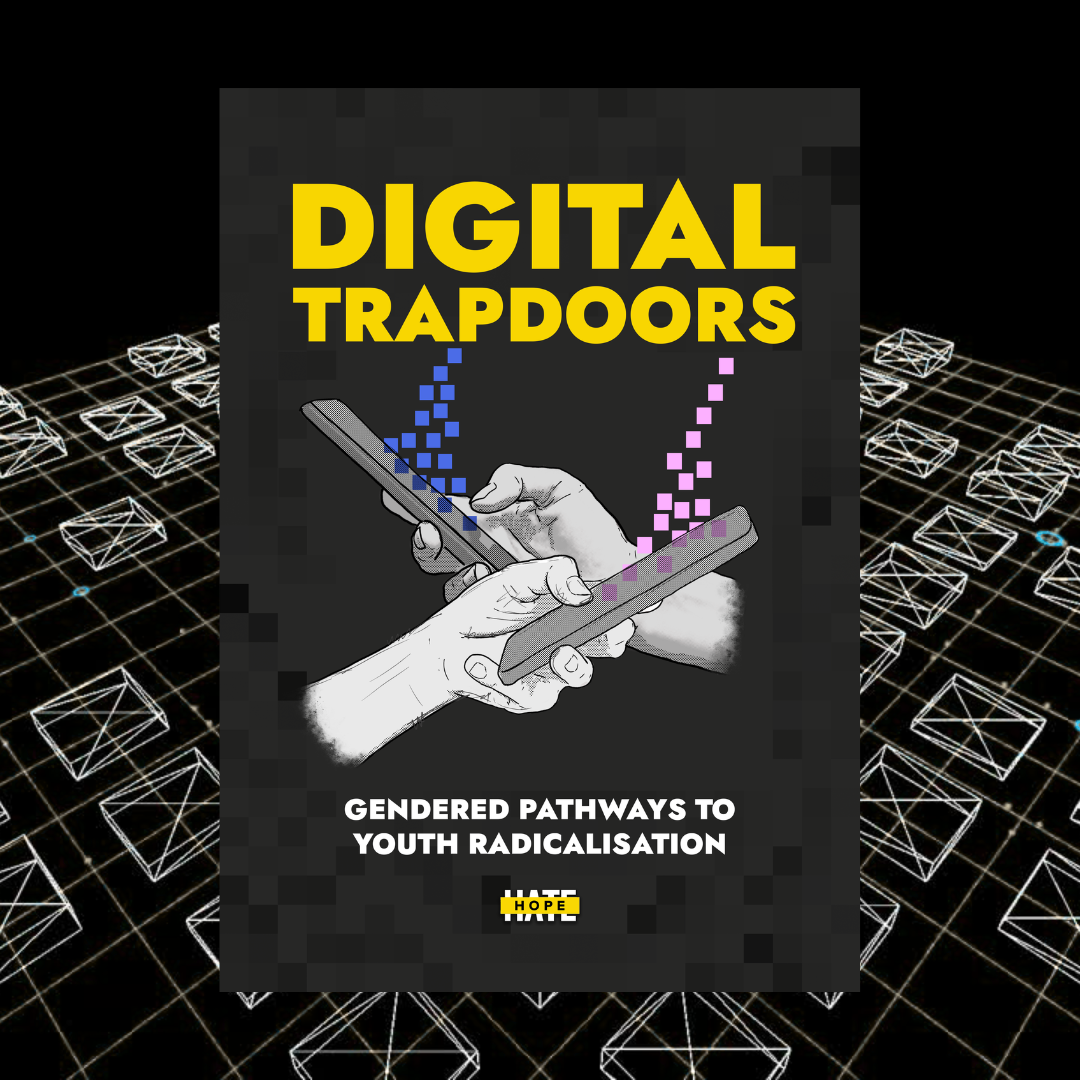
Drawing on a Data Desk analysis of more than 11,000 interactions across X, Instagram and TikTok and a survey of 1,063 HOPE not hate supporters, our new report looks at how young men and young women are encountering different forms of harmful content online.
It finds that radicalisation increasingly takes place through seemingly ordinary content. Research by Dublin City University, cited in the report, found young men on TikTok and YouTube Shorts are served misogynistic or male-supremacist content within an average of 23 minutes. For some young men, fitness, gaming or political feeds into misogynistic and far-right material. For some young women, lifestyle, wellness and “tradwife” content can introduce increasingly regressive ideas.
Tracking the real online lives of a 17-year-old young man and a 22-year-old young woman, our researchers identified a recurring three-stage pattern of Hook, Mask and Pivot, that maps onto wider models of online radicalisation.
The report sets out what is happening, the role social media algorithms play in amplifying it, and what policymakers, platforms, educators and communities can do, including a clearer definition of “safety by design” in the Online Safety Act.

We need your help to continue our vital research. Your support empowers our research and intelligence teams to effectively monitor far-right groups, ensuring we’re prepared for the challenges they bring.