
By DAVID LAWRENCE
Far-right ideologies can lead to violence, a fact sadly borne out by the skyrocketing numbers of far-right terror convictions in recent years. Altogether, neo-Nazis continue to face justice for promoting, planning, organising and committing acts of terrorism at a rate far higher than in the 2010s.
Last year, 16 individuals were jailed for far-right terrorism offences, with a further three convicted and awaiting sentencing (a 21% decrease from 2024). As usual, all offenders were men, and many very young; almost half (47%) were aged 25 or younger at sentencing, and over a fifth (21%) were teenagers. This chilling statistic is broadly consistent with 2024.
In addition, referrals to Prevent – the government’s anti-terror programme – hit a record high in the year ending March 2025. A total of 8,778 were made, 21% of which related to extreme right-wing ideologies, more than double those relating to Islamist radicalisation (10%). Over a third (35%) of extreme-right referrals concerned individuals aged between 11 and 15.
In only two cases did offenders actually carry out an attack, both of which were fortunately non-fatal. One was the attempted murder of an asylum seeker in a Worcester hotel, by Callum Parslow; the other was the attempted murder of an officer during an attack on Talbot Green Police Station, by Alexander Dighton. Both perpetrators are serving life sentences for their crimes (for the Leeds crossbow attack, see below).
However, several individuals were convicted of planning or attempting attacks, most notably the “Einsatz 14” terror cell that plotted to bomb mosques and synagogues. The trio of neo-Nazis, led by self- appointed “Führer” Brogan Stewart, stockpiled more than 200 weapons, including crossbows and parts of a 3D-printed firearm. In another disturbing case, a 17-year-old was arrested outside the Inverclyde Muslim Centre with an airgun and aerosol cans: he had planned to set the building ablaze and trap worshippers inside.
Stockpiling of weapons remains a recurring feature. Former Nottinghamshire police officer Alexander Campbell amassed over 110 weapons, and a 15-year old in Shropshire videoed himself with an array of potentially lethal weapons, which were marked with the names of notorious bombers and shooters. In addition, the Bedfordshire neo-Nazi Harry Whittaker manufactured explosives in a chemical laboratory in his shed. Despite writing messages about attacking a mosque in Luton, and the police finding explosive devices labelled “throw at swarm of Jews”, Whittaker was convicted of explosives rather than terror offences, and so is not included in statistics here.
Terrorists of all stripes continue to address the UK’s lack of firearms by either attempting to construct their own – especially with 3D printers – or procuring alternatives. While the production of functional weapons remains challenging, manuals for building firearmsand explosives are continuously improving and easy to access. Crossbows are an immediate concern, being both easily accessibleand potentially lethal. Numerous neo-Nazis have been found with crossbows in their possession, with recent high-profile attacks including Owen Lawrence’s attempted massacre in Leeds last April.
THE LEEDS CROSSBOW ATTACK
On 26 April, Owen Lawrence (38) shot two women in Headingley, Leeds with a crossbow, one of whom sustained life-threatening injuries. Lawrence died two days later after shooting himself in the head with an airgun.
An inquest is ongoing, meaning the attack is yet to be officially designated a terror incident and is therefore not included in the general analysis here. However, Lawrence posted a detailed description of his intentions shortly before launching what he called “The Otley Run Massacre”, listing “terrorism, revenge and misogynyic [sic] rage” among the motivations.
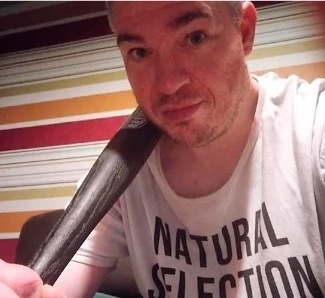
Our analysis of his Facebook posts suggests an obsessive hatred of women. He also claimed he had “explored Far Right ideas”, cited the manifesto of the Christchurch killer, and had previously praised other extreme-right terrorists, including Anders Breivik. Lawrence’s neighbours described him as “very far right”.
The remaining cases are terror-related offences, such as possessing or distributing terrorist manuals, encouraging attacks and promoting banned organisations. These charges have spiked dramatically since the banning of National Action (NA) in December 2016 and the subsequent proscription of three NA “alias” organisations and five other groups. This mechanism for prosecuting the extreme right has been coupled with more proactive policing in this area, and helps explain the overall rise in convictions in recent years.
Such offences are overwhelmingly committed online, often in messaging apps such as Discord and Telegram, on which extreme-right material is readily accessible, and anonymity easily secured. It is notable that the Einsatz 14 cell had never met in person, communicating solely online. This partially accounts for the youth of many offenders; for example, Felix Winter, who was aged just 15-16 when he planned a school shooting, had been radicalised after spending more than 1,000 hours on a neo-Nazi Discord chat.
Telegram’s lax moderation policy has made it the platform of choice for neo-Nazi terrorists since the 2010s, a fact authorities attempted to address in 2024 by banning “Terrorgram”. However, Terrorgram is not an organisation in any formal sense, but a loose network of violent accelerationist neo-Nazi channels, groups and accounts, raising questions over how “membership” can be defined. No convictions for membership of Terrorgram have yet been publicly reported in the UK.
The post-NA wave of proscriptions helps explain why almost all offenders brought to justice last year were “self-initiated”. These individuals acted independently without direct support from a formal terrorist organisation, and such people can be challenging to identify and intercept, as their motivations are often highly individual and their actions unpredictable.
Nonetheless, several were influenced by or affiliated to extreme-right organisations. Robert Talland, jailed for two counts of disseminating terrorist material, ran the Blood & Honour (B&H) music network, a mainstay of the neo-Nazi scene since the 1980s. He also managed the band Embers of an Empire, of which his son Stephen and daughter Rosie were members; both were also jailed for race hate offences. The convictions follow the freezing of B&H assets last January on the grounds that the group was suspected of “promoting and encouraging terrorism”, as well as recruiting for and funding terrorism. The use of this kind of sanction to counter far-right terrorism is unprecedented.
In addition, HOPE not hate revealed in June that Brogan Stewart, the ringleader of the Einsatz 14 group, had expressed his intent to join the neo-Nazi British Movement and also attended a meeting of fascist organiser Alek Yerbury in Wakefield, just four days before his arrest.
The Order of Nine Angles (O9A) – a neo-Nazi Satanist network – continues to cast a dark shadow over corners of the extreme right,both at home and abroad. Declan Candiani, jailed for possessing terror documents, was fascinated with O9A, claiming he made a “pactwith the devil”. Even more troubling was the case of teenager Cameron Finnigan, guilty of possessing a terrorist document, who was immersed in the 764 cult, an online child-exploitation circle linked to O9A. The O9A occult network has had an outsized influence on neo-Nazi terrorism, hence its designation as a terror group in New Zealand last year; the UK government has yet to take the same step.
O9A has also helped foster a sickening current of sexual sadism on the extreme fringes. Finnigan was also convicted of possessing indecent images of children and of encouraging a woman to commit suicide for an online audience. The overlap between far-right terror and child sex offenders is both considerable and longstanding; Martyn Gilleard was imprisoned for a nail-bomb plot and for possessing 39,000 indecent images of children back in 2008. He was released in 2023, before receiving a further seven years and nine months last October for a gunpowder manual found at his home. In addition, Callum Parslow has a history of stalking and harassing women online, sending his victims – one of whom was 17 years old – messages involving sexually-motivated murder, torture, rape, extreme racism and more.
The extreme right – including O9A and Terrorgram – operates transnationally, and UK terrorists continue to draw inspiration from overseas attacks. Chief among them remains the 2019 Christchurch killer, who livestreamed his murder of 51 worshippers at two New Zealand mosques after publishing his manifesto online.
In addition, at least three young neo-Nazis convicted last year venerated American school shooters. This disturbing, violent nihilism is not constrained by political belief;
Prevent referrals for “Fascination with extreme violence or mass casualty attacks (where no other ideology)” rose by 240% last year.
Increasingly, young individuals are drawing from a diverse array of extremes in order to justify thoughts and acts of violence.
TRENDS AND TRAJECTORIES
The large number of far-right terrorists brought to justice in recent years reflects the high threat environment. The public debate around immigration and Muslims has toxified dramatically, in tandem with the erosion of trust in institutions and democracy. This is in the context of economic crises, rising social isolation (especially among the young) and a pervasive pessimism.
We have repeatedly warned of the dangers posed by the “post organisational” far right. Political extremism has evolved away from formal organisations into a more diffuse online milieu, widening the scope of threat and making it harder to track. Vast quantities of extremist material are accessible online, particularly in closed chat groups. There, adrift from mainstream values, ever-greater polarisation can occur. New technologies, such as AI, provide further opportunities for extremists to radicalise and recruit others into acts of terrorism.
Given all this, it is sadly unsurprising that some British men are pulled into a mire of neo-Nazism, criminality and violence. As tensions around the refugee crisis continue to mount, the authorities must adapt to meet this ever-changing threat.
State of HATE 2026 is your essential guide to the far-right threat—and how we stop it. View the full report today.

We need your help to continue our vital research. Your support is a stand against hate and division. It empowers our research and intelligence teams to effectively monitor far-right groups, ensuring we’re prepared for the challenges they bring.