On Saturday 24 May, “strikers” across dozens of towns and cities, motivated by a right-wing populist agenda, attempted to bring the country to a stand still.
At 12:00, protestors gathered across Britain armed with placards railing against immigration, Net Zero targets and the Starmer government.
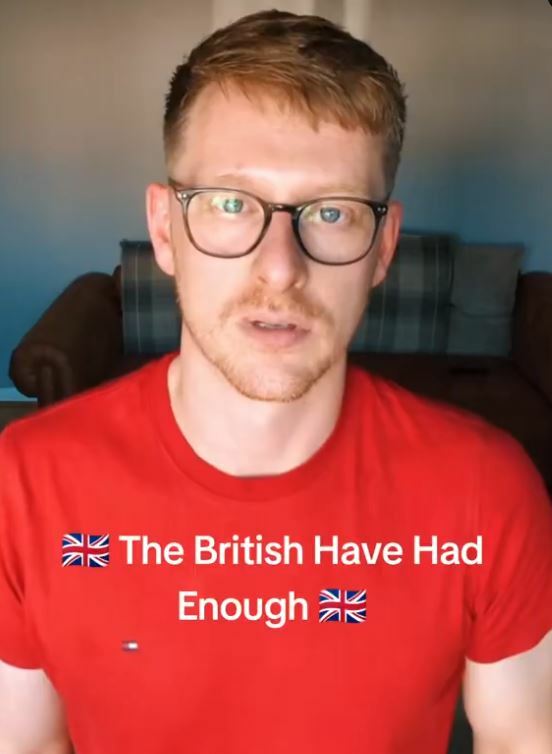
The Great British National Strike was organised by Richard Donaldson, an ex-soldier from Chester, in the hopes of “uniting” the UK against the government through country-wide strikes. However, what was promoted as an “apolitical event” predictably gained the backing of a variety of far-right actors.
An event promoted as a nationwide “party” instead saw underwhelming numbers across the board, and was blighted by figures from the anti-migrant street movement, conspiracy theorists, hard-line fascists and a Cornish parish councillor who claimed that the Holocaust was “massively over-exaggerated”.
We review the events of the weekend and look toward the future of the campaign, as it gears up for “Phase Two”.
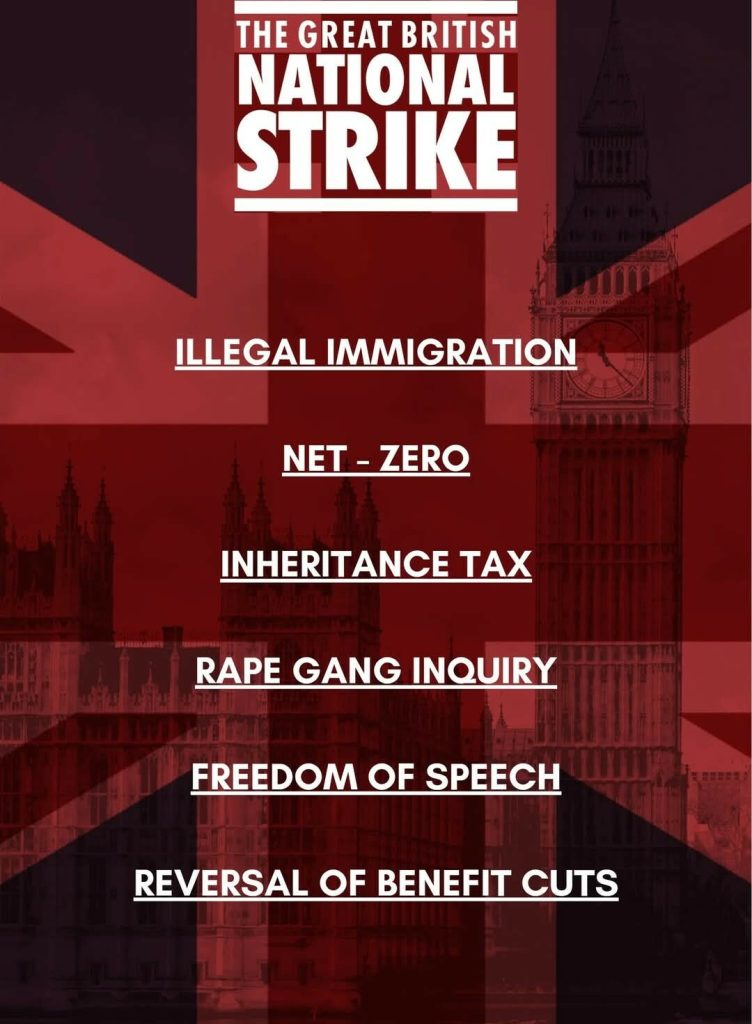
The campaign advertised “strikes” in 77 towns and cities across the UK, from Aberdeen to Truro. By this number, each strike would have to attract almost 6,500 people to make up the nation-sweeping 500,000 which GB News told viewers to expect.
However, Donaldson clearly underestimated what it takes to mobilise masses. The busiest event in London attracted several hundred people, but most were 50-100 strong, many saw just a dozen or so and others, predictably, failed to materialise at all. The lack of organisation on the ground was palpable, with many protestors left milling about without speeches or direction.
The low turnout was brought into sharp relief by a fierce counter-protest response across many cities, which frequently outnumbered the “strikers” “and contained them to small areas.
An overambitious attendance target was not the only symptom of Donaldson’s inexperience. Leading up to the strike, even supporters began to pose an obvious question: why organise a strike on a Saturday?
In response to critics arguing that the Saturday date enabled people to avoid having to actually take time off work, Donaldson maintained that many Brits work on a weekend, and thus the concept of a strike still stood. Whatever the case, the fact that such low numbers materialised on a sunny bank holiday weekend must surely sharpen his disappointment.
The internal conflict was clear in many of Donaldson’s videos where, as opposed to taking on the government, he was forced to debate with his own supporters about whether the event was to be run properly and effectively. This lack of cohesion within the group, alongside a general distrust of Donaldson, also bodes ill for the movement’s “second phase” as “The Great British Protest”.
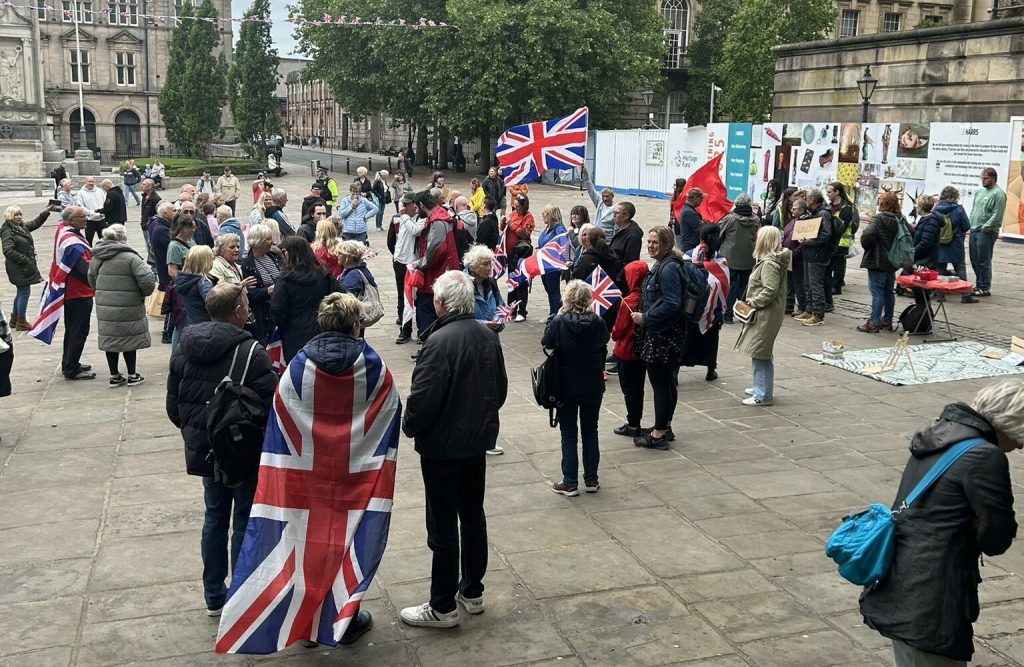
Where attendees lacked in quantity, they worsened in quality. Despite the campaign’s insistence that it was “apolitical”, it revolved around a grab bag of right-wing talking points and the façade was dropped altogether days before the strike, when the GBNP X account retweeted a post by Stand Up To Racism with the words: “You know you’re doing the “right” thing when you are pissing off the left.”
The day itself confirmed suspicions as activists across the UK far right materialised on the streets. For example, several events featured posters promoting the freeing of the talismanic far-right activist Stephen Lennon (AKA Tommy Robinson), and the London demonstration endured the presence of Nick Tenconi, leader of both UKIP and Turning Point UK.
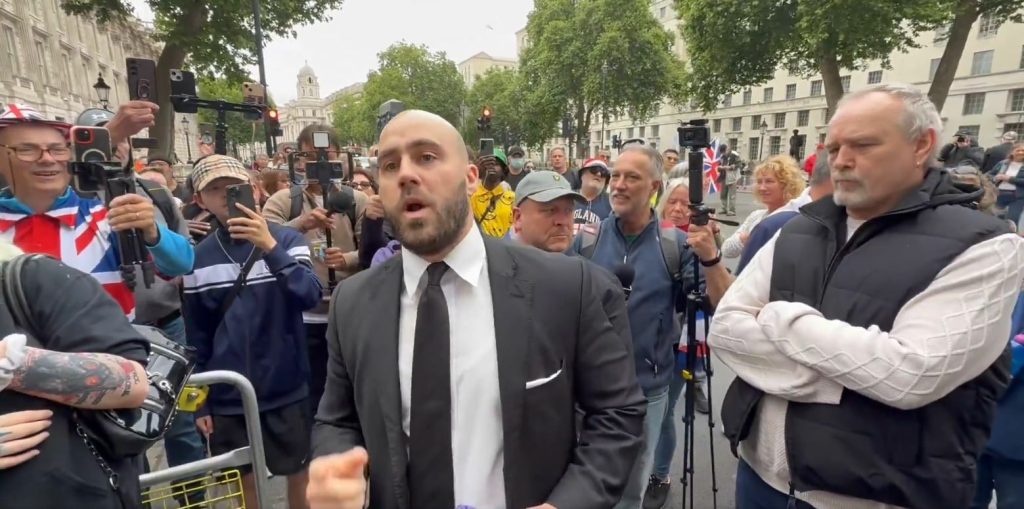
Several events were live-streamed by far-right “citizen journalists”, including so-called “migrant hunters”, and in Lincoln, familiar faces surfaced from the anti-migrant camp at RAF Scampton.
The Coventry and Hull events even attracted members and associates of the National Rebirth Party (NRP), an oddball but extreme fascist party whose leader once mused that MPs had “learned nothing” from the death of Jo Cox, and “are just as ignorant and selfish as ever”.
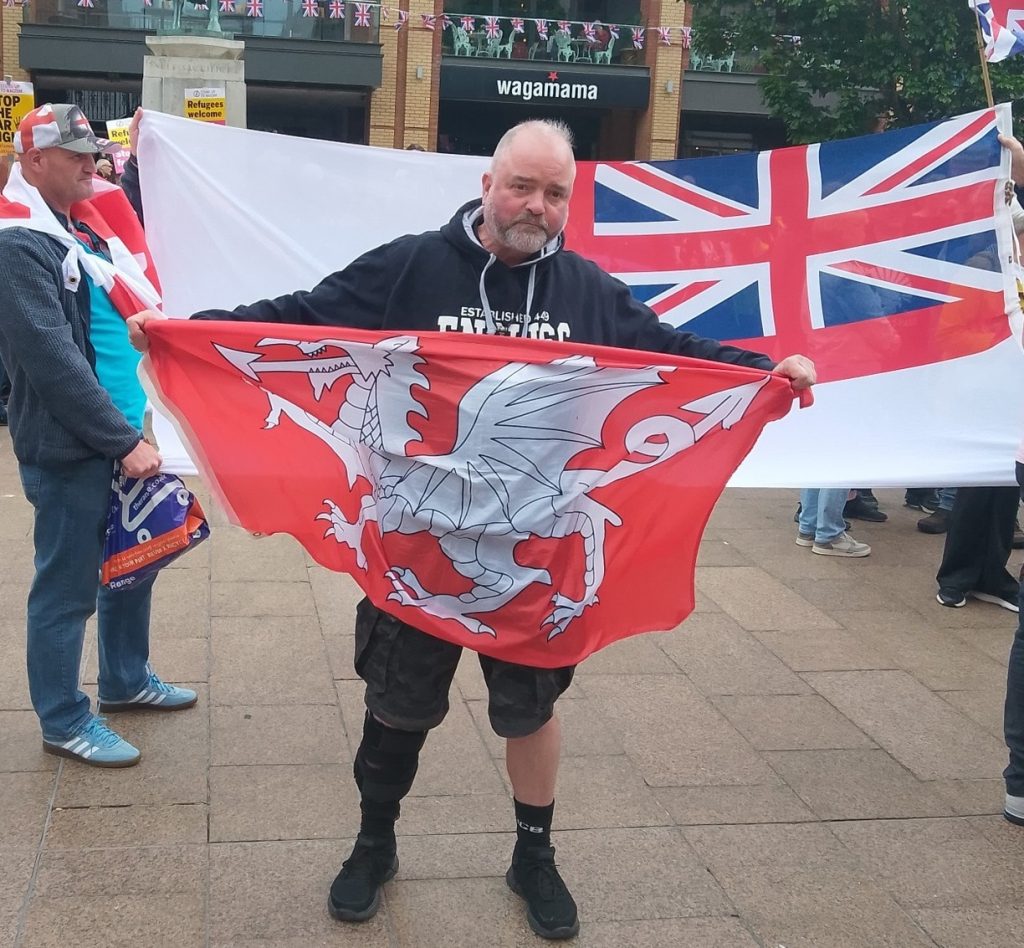
Peter Lawrence, a parish councillor for the British Democrats – a BNP splinter group – was present at the Truro event. Lawrence, who also has links to the fringe National Housing Party UK and the NRP, took the opportunity to go on an antisemitic rant on how Hitler’s actions were rooted in “World Jewry declaring war on Germany” through “bankrupting them”. He said that “Hitler didn’t have beef with the Jews” and said that he “could not find a single order from Hitler calling for the execution of the Jews”.
Other undesirables included Mike Lynton, the South West Regional Organiser for the fascist Homeland Party, in Exeter, and members of the tiny but openly neo-Nazi groupuscule White Vanguard in London.
Other events were subjected to the remnants of the conspiracy theory-driven anti-lockdown movement, who resonated with the incoherent populist anger underpinning the strikes. Other conspiracy theorists were sceptical of the campaign, however, with outlets like UK Column and Unity News Network dismissing the events as “orchestrated clashes” designed to enable greater state crackdowns.
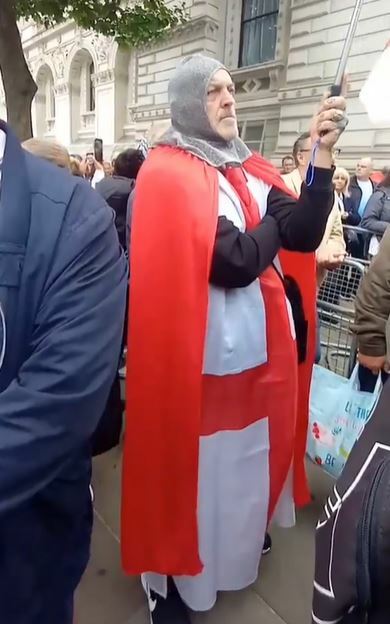
Following the electoral successes of Reform UK, it is unsurprising that opportunists like Donaldson are seeking to connect with the vein of populist anger within British society. However, while this anger is easily riled online, effectively harnessing it on the streets is a far more difficult task. Saturday was evidence of a sector of British society who are prepared to rub shoulders with far-right groups in order to access a platform for their grievances. However, Donaldson has promised from the beginning of his campaign that the strike was only “Phase One” of a three phase movement.
“Phase Two” commenced shortly after the event, as the campaign’s social media accounts rebranded to “The Great British Protest”. Simultaneously, Donaldson announced a fundraiser for the campaign which, at time of writing, has raised £16,000. Yesterday evening, he posted a video explaining that, ultimately, this is not enough to produce a movement that can effect change. He introduced another funding page, promising that “phase two is going to happen, but we need funds”. He described this support as “essentially paying our wages”, but also facilitating stages, megaphones and leaflets through “every letterbox in the country”.
Aside from financial concerns, the broader issue of successfully moving people from social media onto the streets persists. It remains to be seen what will come of this over-ambitious and clearly inexperienced campaign; whether “Phase Two” will succeed in gathering a modicum of support, or, simply deflate under the weight of its own unrealistic expectations.
Prefer to listen? Click the play button to hear the audio version. Harry Shukman Reform UK is staffed by oddballs and enigmas, but none odder…