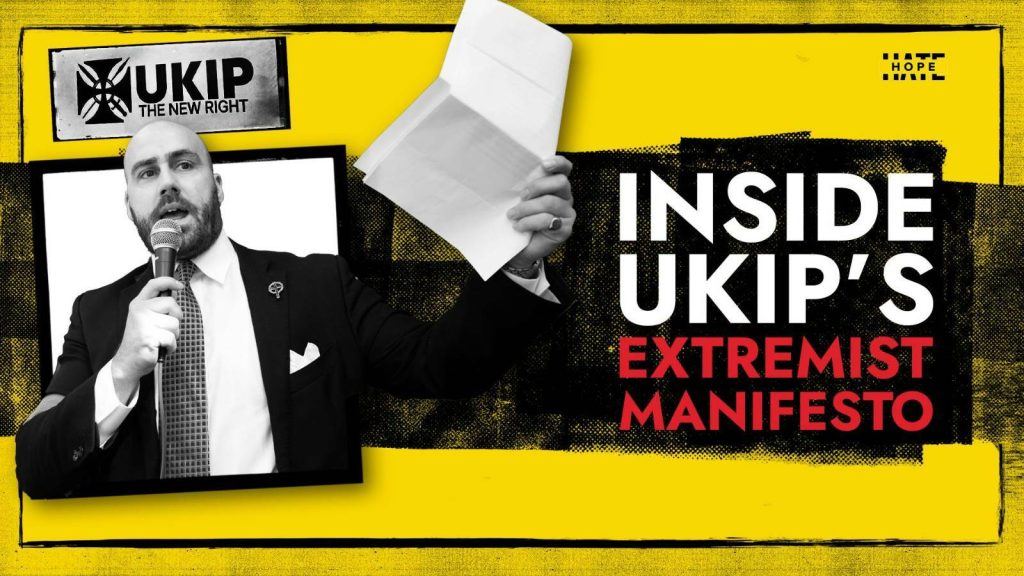
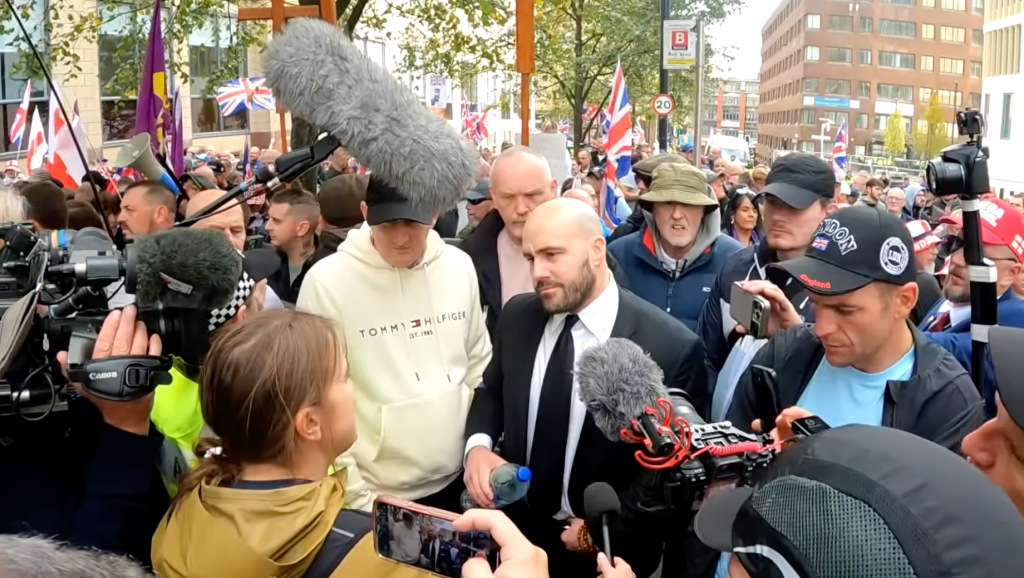
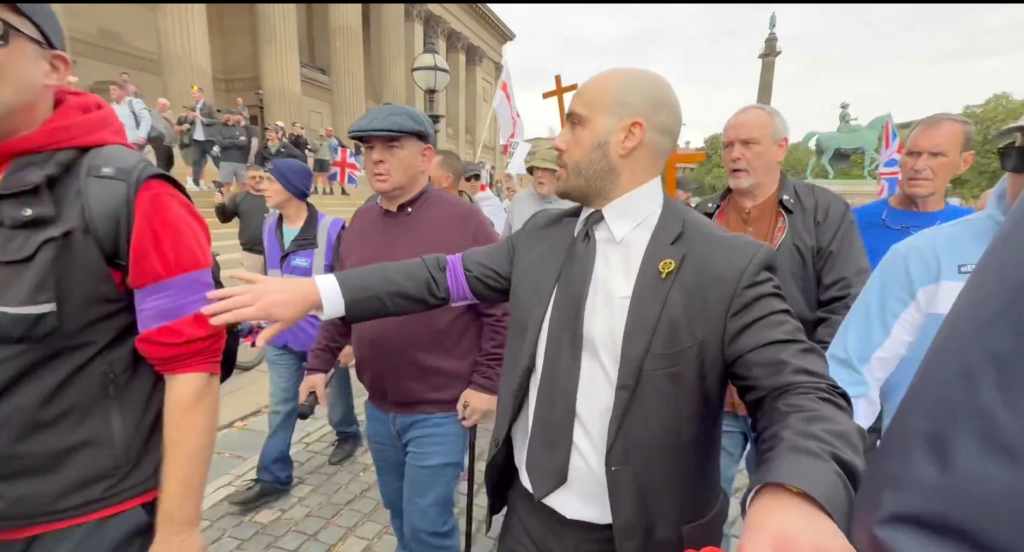
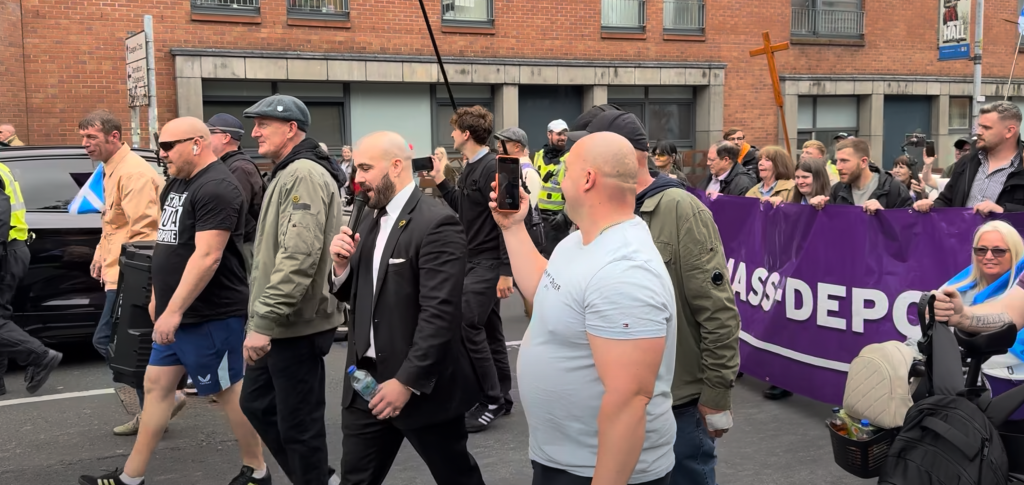
On Saturday 25 October, the last of UKIP’s series of “Mass Deportations” rallies is due to take place in London. The event was initially planned for Whitechapel, but the Met Police banned UKIP from marching through the area due to concerns about the “realistic prospect of serious disorder”. In response, UKIP leader Nick Tenconi has moved the starting point to Knightsbridge, before hiking his followers to Speaker’s Corner.
UKIP has struggled to establish itself as a party with any electoral potential, despite Tenconi spending the summer using anti-migrant protests as campaign platforms. However, the group’s rallies still regularly manage to attract 200 attendees, with more expected in a central London location.
But what are these people marching for? What does UKIP truly believe?
The UKIP manifesto reflects aggressive remigration tactics, targeting those who have resided in the UK for up to 25 years. It also offers financial rewards for those willing to identify “illegal migrants” to the government, turning the British population into state-sanctioned bounty hunters.
It slashes abortion care, while simultaneously banning sex education for anybody under 18. It instils exclusively Christian messaging in education and bans Islamic faith schools. It denies the trans community their right to exist, forcing them into conversion therapy, and hinders gay couples from starting families.
Overall, UKIP offers an alarmingly authoritarian agenda which penalises massive sections of the population for their immutable characteristics and terrorises immigrant communities.
UKIP at a glance
UKIP’s place in British politics has changed considerably since its founding in 1993. Operating as a single-issue Eurosceptic pressure group, it was the original home of Nigel Farage, who dominated the party throughout the late 90s and early 2000s, before becoming leader in 2006. UKIP was considered right-wing populist, running on anti-EU and anti-immigration policies. In the 2010s, it gained some momentum in local council elections and obtained 12.6% of the vote in the 2015 general election. With Farage as leader, it offered a home for those to the right of the Tories.
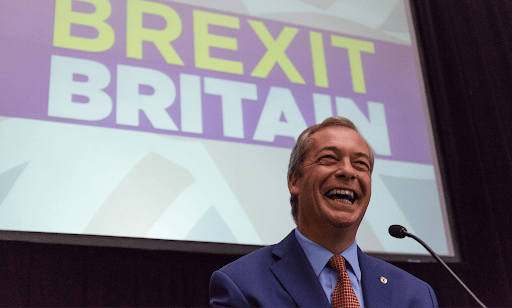
Farage stepped down as leader in 2016 following the Brexit referendum, and was followed by a succession of doomed, short-lived leaders as the party’s vote went into freefall. Gerard Batten became head of UKIP in 2018 and adopted a more explicitly anti-immigration and anti-Muslim agenda, supporting the street-style politics which UKIP engages with today. In the end, UKIP became too extreme even for Farage, who cited the party’s “anti-Muslim fixation” as the reason for him leaving the party in 2018.
UKIP faded into the political background as Farage founded the Brexit Party in 2019, which re-established itself as Reform UK in 2021 . As UKIP became ever more extreme, Reform came to be viewed by many as a more palatable alternative to the mainstream parties. Between 2021 and 2025, UKIP continued to decline in significance, with voter support almost entirely collapsing. In February 2025, Nick Tenconi was made leader of UKIP, and the party emerged as the street-level, Christian nationalist movement of today.
While UKIP has little electoral sway – receiving just 0.2% in the recent Caerphilly by-election – Tenconi has established himself as an aggressive leader willing to confront perceived issues with, in his own words, “no weakness, no mercy, no diplomacy, no surrender”. His manifesto reflects this authoritarian mindset.
Immigration and Remigration
UKIP’s approach to immigration is both drastic and dogmatic. As part of its proposed immigration policy, “any arrivals in Britain since 1997, be that legal, illegal or asylum seekers, will have their status in Britain questioned”. This would mean that working individuals and citizens who have lived in the UK for over 25 years would be vulnerable to deportation.
On top of Tenconi’s promise to deploy the military to “hunt down” immigrants, UKIP policy also encourages vigilante-style local policing:
“In order to assist with ensuring their swift detainment and deportation, the Party would offer a reward of £500 per illegal migrant correctly identified by British citizens, which would be paid upon their arrest and identification.”
This offer of financial rewards directly exploits the economic hardship of working class people. UKIP is willing to withhold funds that could have been used for community improvement, and instead reserve them for those willing to turn in other community members. This does nothing but sow division and distrust within local communities.

Anti-LGBTQ+ Policy
UKIP’s manifesto also takes aim at the LGBTQ+ community. As we have previously mentioned, the group plans to repeal the 2013 Marriage Act which allows gay marriage.
Furthermore, UKIP would make it virtually impossible for LGBTQ+ couples to have children. IVF and surrogacy would be exclusive to married heterosexual couples, the manifesto stating that other couples can adopt. However, it later declares that it would scrap laws that prevent adoption agencies from discriminating against gay couples, and actively give priority for adoption to heterosexual couples. Stripped of access to IVF, surrogacy services, and put at the bottom of the queue for adoption, gay couples have little hope of being able to start a family.
In addition, the manifesto also completely rejects the recognition of trans people. It advocates for the Gender Recognition Act to be repealed, and preventing the NHS from providing gender reassignment surgery. In an appauling embrace of conversion therapy, “individuals presenting with gender identity problems will be referred to a reputable therapist who rejects gender ideology”. For UKIP, it is not enough to prevent transgender people from accessing the services they need. Instead, they ban the recognition of their very existence.
UKIP also “regards the teaching of gender ideology as degenerate”. Under UKIP policy, any teachers “promoting” ‘gender ideology’ would be barred from teaching and placed on the sex offenders register. By UKIP’s standard, teachers who simply acknowledge that transgender people exist, and have a right to do so without being exposed to conversion therapy, would classify as a sex offender.

Social and Cultural Policy
The UKIP manifesto blames the downfall of society on “the breakdown of families, the attack on masculinity, on Christian teachings, on moral and ethical conduct and especially the impact of radical feminism”. As a result, it promotes the nuclear family structure, traditional gender roles and conservative Christian values as the fix-all solution.
Part of this is a Victorian approach to sexual health. UKIP promises to close half of the abortion clinics in the UK and abolish buffer zones, the protective area around a clinic in which it is illegal to attempt to influence someone’s decision to access abortion services. In its place, they would actively situate “Christian pastoral teams” outside abortion clinics.
UKIP offers a similarly archaic view on the UK’s mental health epidemic, arguing that it “derives only and solely from a lack of faith and a lack of purpose”.
In restricting access to abortion services, you might think that UKIP would embrace a well-established sex education system to prevent unwanted pregnancies. Apparently not. Instead, they promise to end sex education programmes for under 18s.
This is not the only area where UKIP plans to strip education. They also argue that “emphasis on teaching slavery is a means to delegitimize Britain and stoke racial grievance among Black and Asian people”. Instead, the group promises to “properly contextualise the teaching of slavery, emphasising Britain’s role in ending it”. This is a way to prevent Black and Asian children from “growing up with imaginary racial grievances”. UKIP’s willingness to reconstruct history to suit its ideology is both shocking and dystopian, indicating a desperation to prevent young people from being fully educated on Britain’s history.
Following the dystopian theme, one section of the UKIP manifesto targets local libraries. It argues that a strict vetting process would be introduced “which disallows members of left-wing and far-left political groups to be employed”, banning badges and signage in public buildings.
It takes a similar approach with museums, heritage attractions and galleries, citing that “political messaging will carry financial penalties”. Tenconi spends much time voicing concern over “free speech”, but is happy to ban any individual with left-wing affiliations from a job sector and prevent history itself from being linked to any sort of politics.
Christian Nationalism
While the UKIP manifesto does mention Christianity, Tenconi clearly felt that the topic was so important that it needed to be fleshed out in a separate document. Thus, presented alongside their manifesto is “Christianity in the Heart of Government”, which promises to make the UK a hostile environment for anybody who is not a Christian.
This document primarily encourages British Christians to tie their faith into their political decisions. They argue that “every other faith in Britain is highly political and vote in blocks” and so Christians should follow suit – clearly assuming that UKIP would be the obvious choice for a mobilised Christian voter.
Through this block voting, UKIP hopes to dominate other beliefs by “prioritising funding and promotion of Christianity” and “creat[ing] a hostile environment and discriminatory nature against faiths and ideas designed to subvert Britain’s faith (Christianity) and culture”. UKIP is openly pursuing a Christian supremacy, promising to come down hard on any beliefs which disagree with Christian values.
The party shows open religious bias in its recruitment processes: “While not crucial, the party will place emphasis on recruiting Christian candidates”. Tenconi’s aggressive views against affirmative action policies appear highly selective.
UKIP’s educational reforms regarding Christianity are equally haunting. The group plans to make the Lord’s prayer, Christian hymns and biblical teachings required at schools, with Religious Education classes emphasising Christianity. Considering less than half of the British population actually identify as Christian, why should those of different faiths, or no faith at all, be forced to engage in religious practices?
UKIP poses a confusing dilemma for Muslim students. On one hand, its manifesto states that Islamic faith schools would be banned (“There are fifty-seven Islamic countries in the world should families prefer Islamic teachings”) and children from Islamic families will not be permitted to attend single faith schools. On the other hand, Tenconi recently stated in an interview that “there will only be Biblical Christian prayers… readings, teachings, worship” and “acknowledgement” in schools, and “if you’re of another faith, you’re allowed to go to a private school and pay for it yourself”.
But, UKIP is planning to ban Islamic faith schools. Furthermore, all mixed secular schools would be converted to Christian institutions. Therefore, the only schools available would be Christian institutions, enforcing Christian prayer. As a result, for a Muslim child to go to school at all, they would have to essentially undergo forced conversion.
The decision to change the location of this Saturday’s march has, momentarily, sent UKIP into the headlines. There will be many people who will assume it is still the party it was ten years ago. They are wrong. Tenconi’s UKIP is a far-cry from any mainstream political party, harbouring exceptionally extreme immigration policies, a dangerous vendetta against the LGBTQ+ community and a plan to wipe any non-Christian beliefs out of Britain.
Prefer to listen? Click the play button to hear the audio version. Harry Shukman Reform UK is staffed by oddballs and enigmas, but none odder…