Monday 8 June saw a horrific knife attack in North Belfast. Stephen Ogilvie was stabbed repeatedly in the head and neck, resulting in the loss of his left eye. He remains in hospital, but is reportedly in a stable condition. Hadi Alodid, a 30-year-old Sudanese man, has since appeared in court on charges of attempted murder, possession of a knife and threatening to kill an NHS worker.
Graphic footage of the horrendous attack spread on social media, with many praising locals who were filmed fighting the attacker off Ogilvie with hurleys. Communities both locally and nationally were justifiably angered by the horrifying incident.
As the footage spread, far-right networks took the opportunity to encourage anti-migrant riots across Northern Ireland.
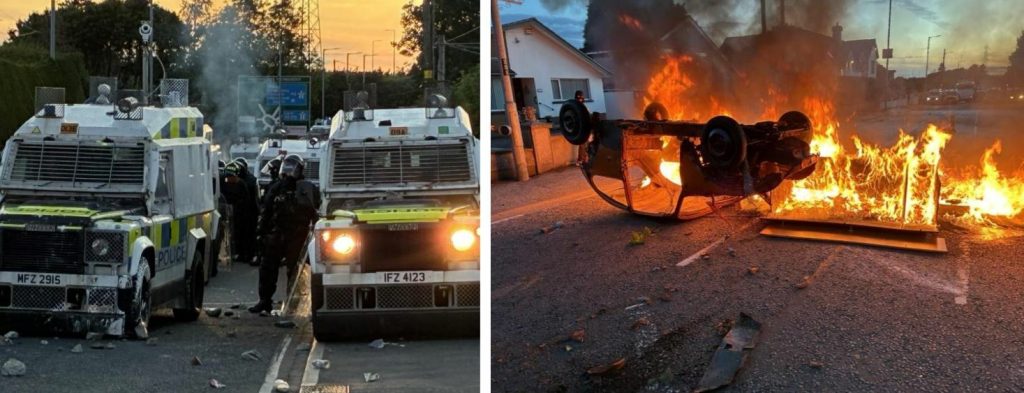
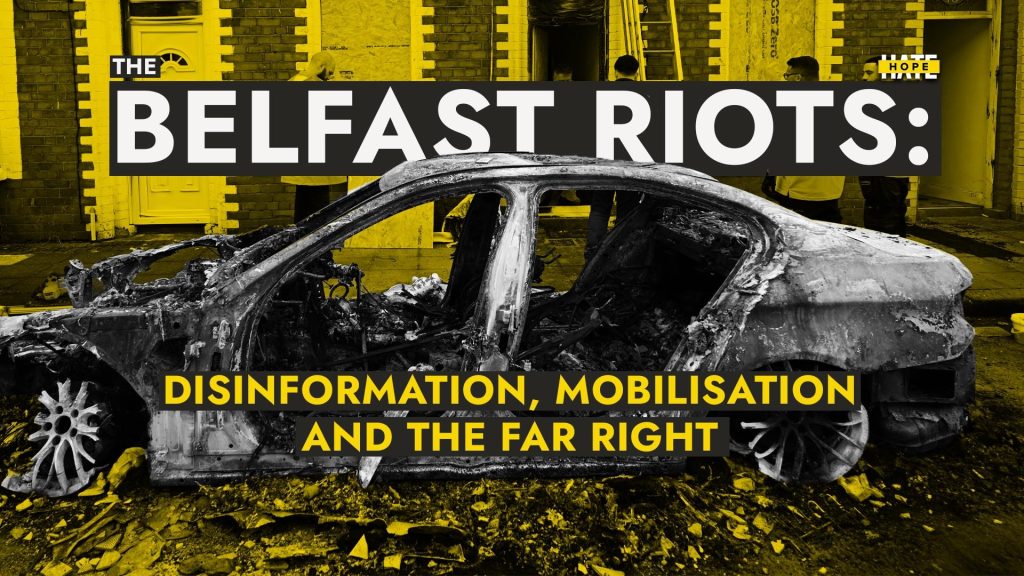
The evening of Tuesday 9 June saw multiple families burned out of their homes in Belfast, as rioters targeted non-white residents. Wednesday evening saw further disorder, though the majority of anger was directed towards police and infrastructure rather than racialised violence. More information can be found in our press briefing.
The Cabinet Office minister declared that a total of 27 people were made homeless by the destruction on Tuesday evening, the youngest of whom was a two month old baby. Nonetheless, far-right actors encouraged more violence amongst an already hurting community.
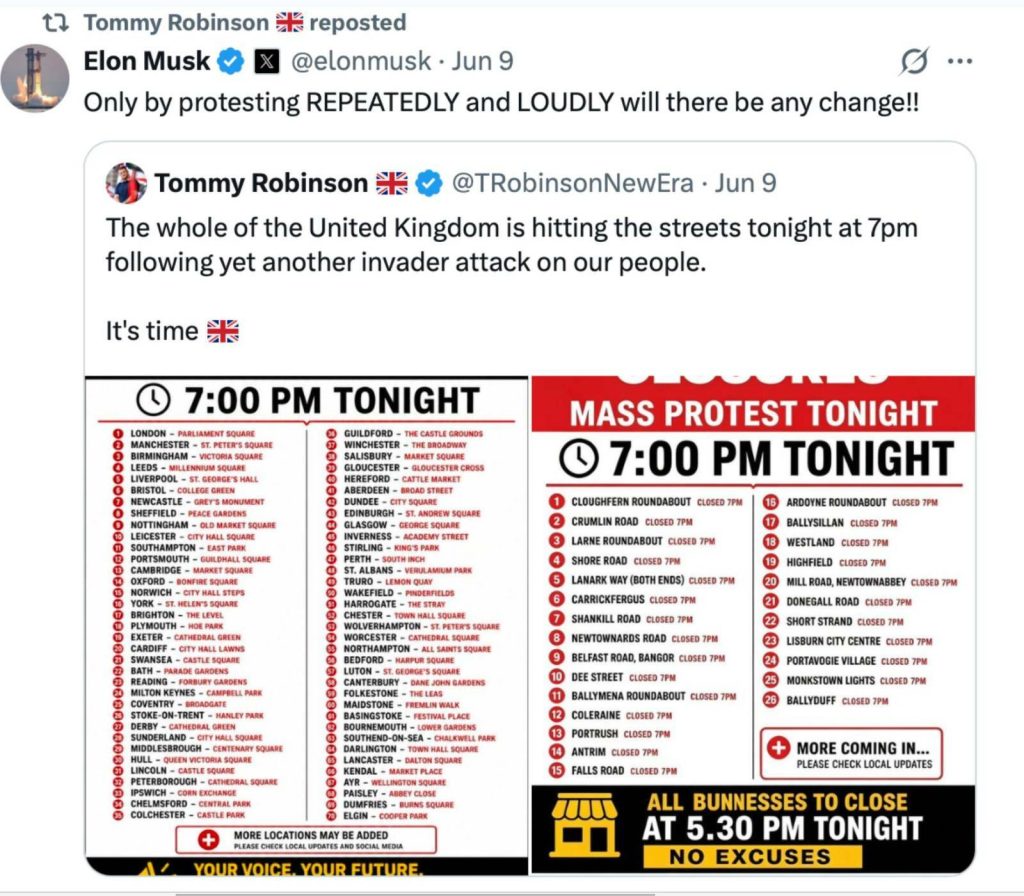
During the early hours of Tuesday morning, localised far-right networks began disseminating a list of Northern Irish road closures. The list invited men over the age of 18 to come to various locations at 7pm wearing dark clothes and “be prepared to fight or be arrested”.
Before 9am, the text list had been made into an infographic, without the additional instructions, but with a threat for shops to close from 5:30 – “no excuses”. It was posted on Facebook groups previously involved in organising and promoting anti-migrant demonstrations, including the Great Province-Wide Protest NI (run by Steven Baker), Official Protestant Coalition (OPC), British Unity and Our Northern Ireland Voice. OPC also posted a graphic promoting specific events in Carrickfergus, encouraging attendees to leave phones at home and to cover their faces, with the instruction: “get them out”.
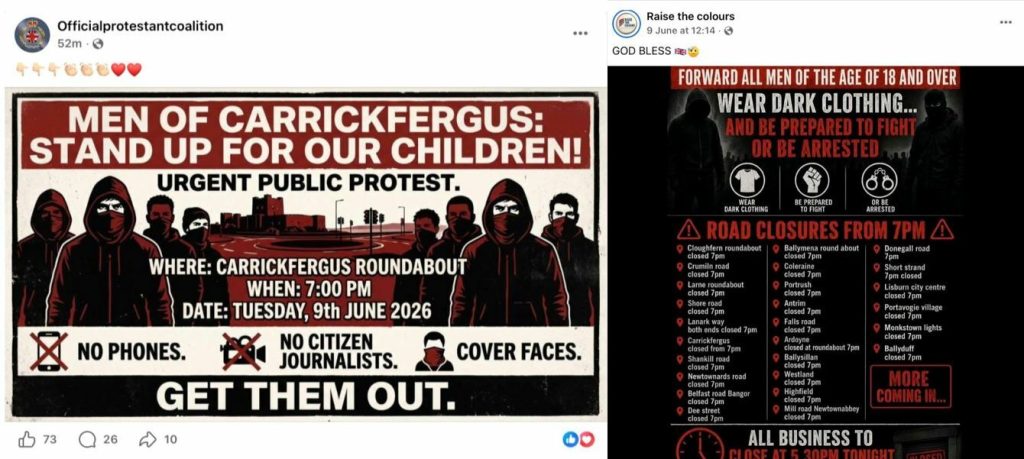
Throughout the day, several posts within the same networks warned auditors not to attend, explaining that anyone caught filming would have their cameras or phones confiscated. Both the language used and warnings against filming displayed a clear preparation for violence.
The post was then spread onto X by English and Scottish far-right actors, who encouraged people to attend. Before long, the list was expanded to include a total of 70 locations across the UK.
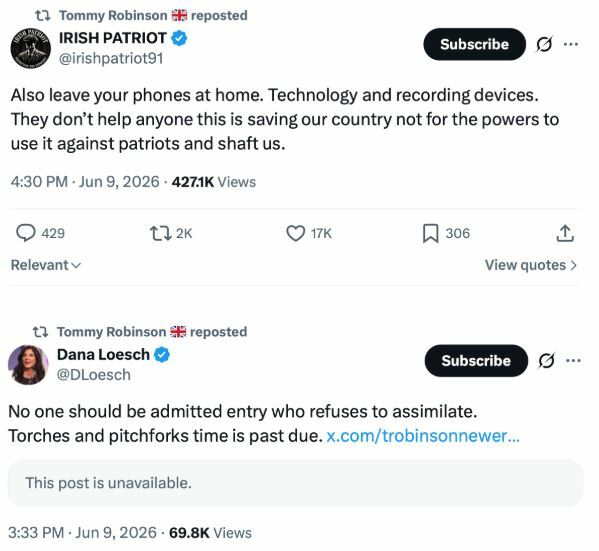
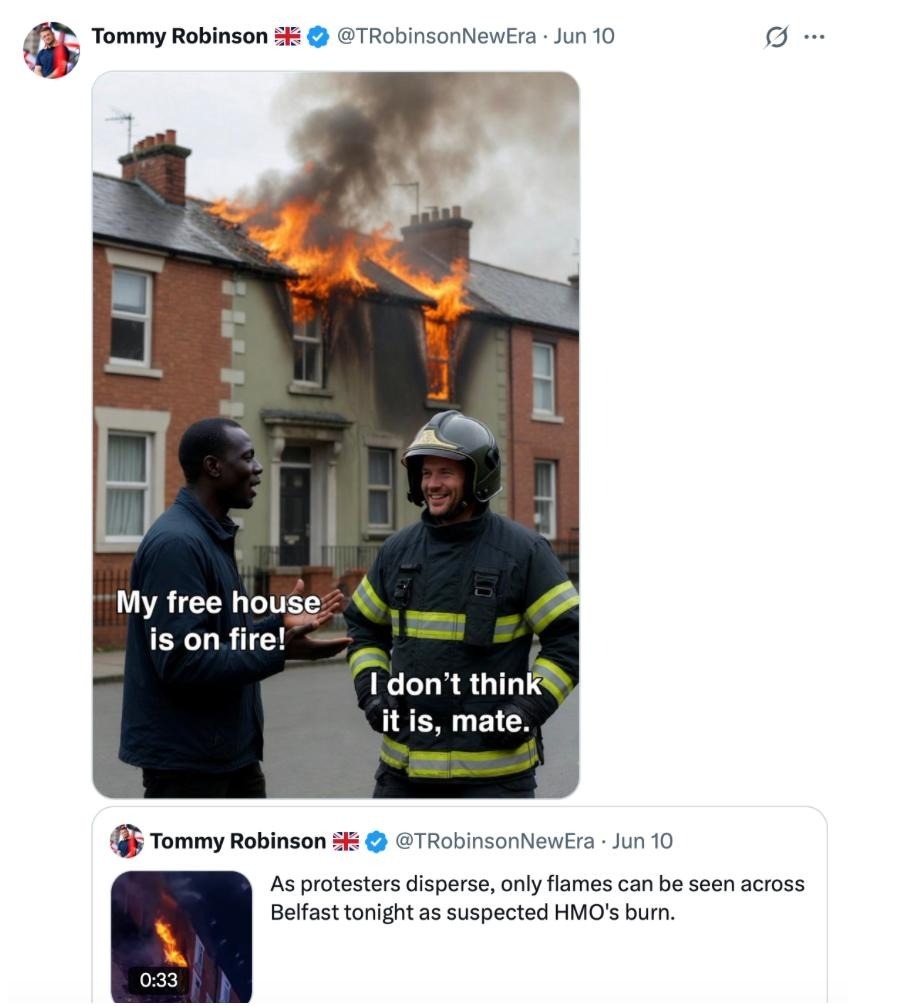
From thousands of miles away in Moscow, Stephen Lennon (AKA Tommy Robinson) not only reposted the list of locations, but amplified content inciting violence in Belfast. He retweeted a post which said that “Torches and pitchforks time is past due” and another which warned people to leave phones and recording devices at home. Both posts were hastily deleted.
Other far-right actors also came out in support of the protests. This included Daniel Thomas (AKA Danny Tommo), Restore Britain spokesperson Orla Minihane and social media personality Gregory Moffitt (AKA Young Bob).
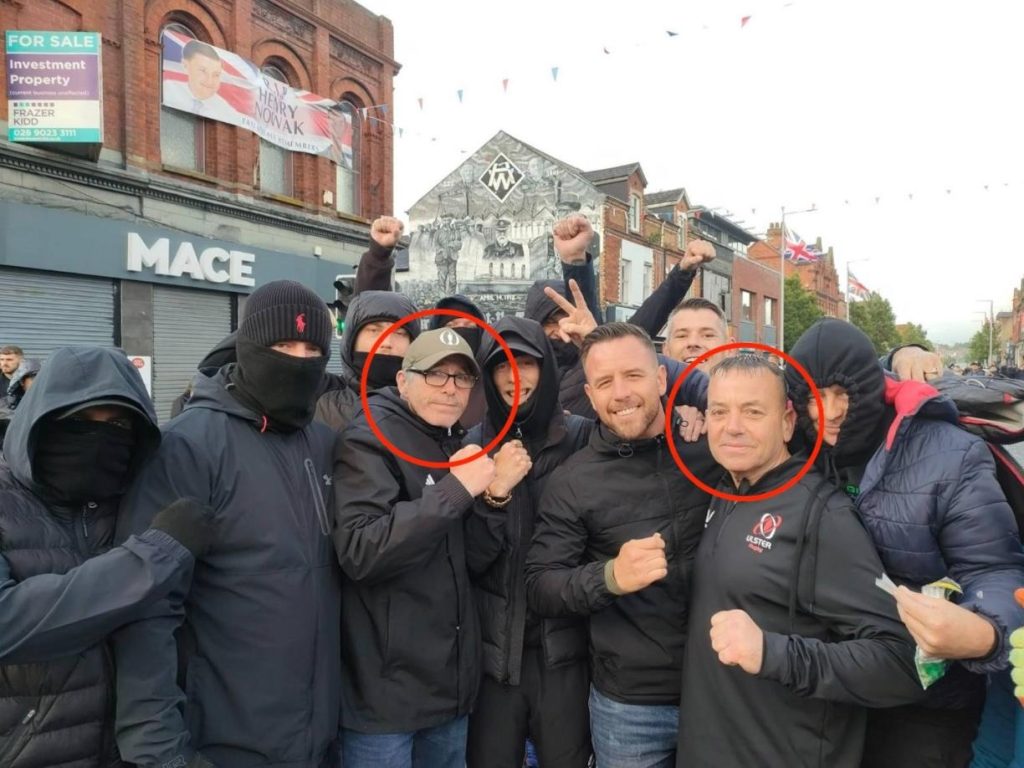
Thomas even went so far as to travel to Belfast himself, posting photos with masked men mere hours before the riots began. Visible in the photo is Mark Sinclair, better known as ‘Freedom Dad’, an anti-migrant activist and ex-UVF bank robber. Next to Thomas is Glen Kane, a convicted sectarian murderer who was jailed for nine years as part of a gang who beat a Catholic man to death in 1992. Kane is currently awaiting trial on charges of possessing a religious pamphlet for stirring up racial hatred.
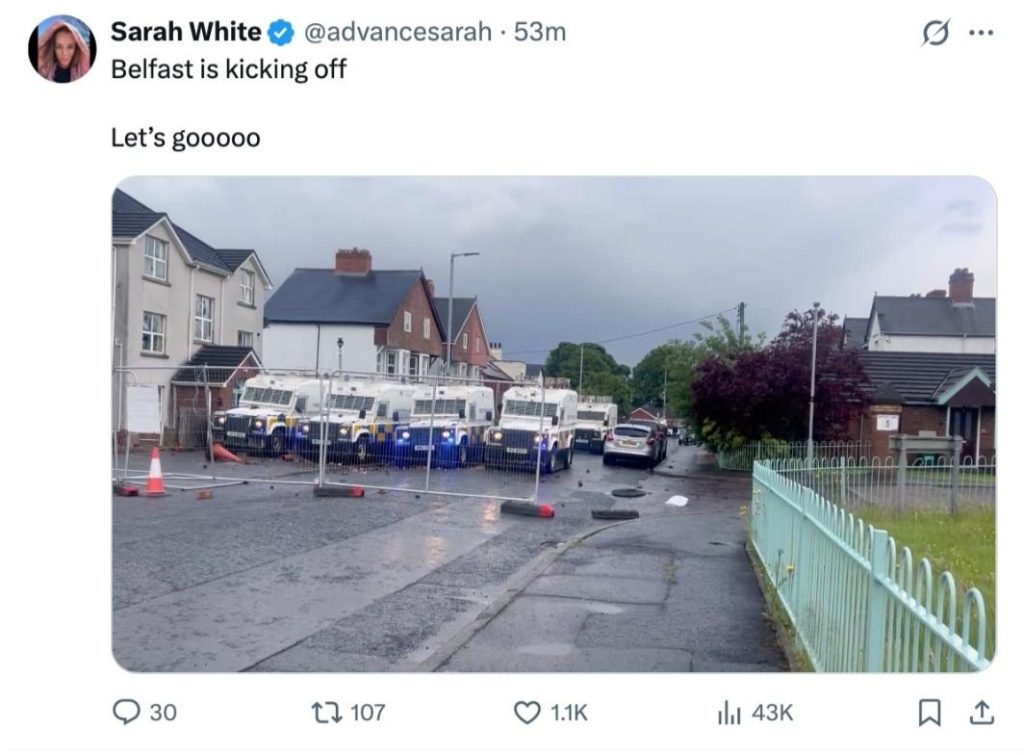
The Belfast riot began on Tuesday evening with widespread attacks on infrastructure, as masked men set fire to bins, cars and buses while throwing objects at police.
As the night darkened, rioters turned to more residential areas. Footage showed them kicking doors and windows down, and setting vehicles alight on compact streets. Several homes were set on fire, with rioters specifically targeting properties with non-white residents.
Many described their fear after being targeted:
Fear amongst racialised communities in Belfast continued into Wednesday evening, as Deliveroo cancelled orders across the city to protest their workers from abuse. This was after videos in Liverpool showed protesters on Tuesday racially abusing delivery drivers.
More families were evacuated from their homes, which were deemed unsafe following the spread of a ‘hit list’ of addresses online.
In scenes reminiscent of the 2024 riots, far-right actors incited racial hatred online which spilled into street violence. In a community already reeling from a horrific knife attack, their actions only fuelled further violence and more fear. The horrendous violent acts of an individual were used to justify racial pogroms which led to young families being burned out of their homes.
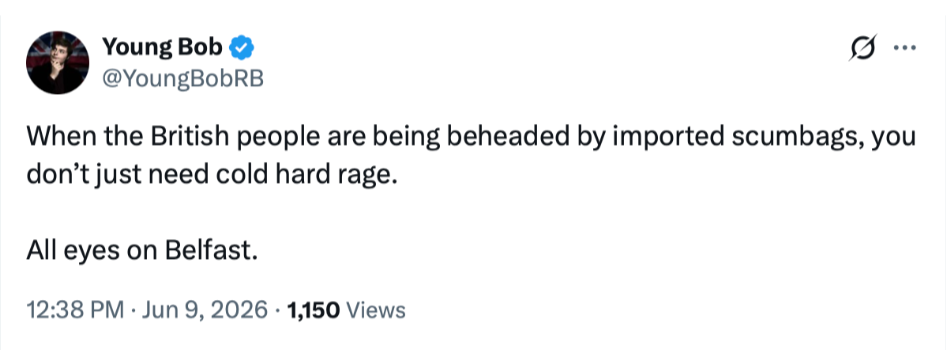
The role of social media platforms in the spread of disinformation and violent content should not go unchecked.
Graphic footage of the stabbing was easily accessible online from the moment of the attack and throughout the day that followed, including on large platforms such as Facebook and X.
HOPE not hate also found that the violent footage was visible on X through an account set to under the age of 18. This means that clips of the attack were accessible for millions of children.
While the public have a right to know about the attack, there is no reason for such visceral footage to be so publicly available, particularly to children. Such footage is not only potentially traumatising for the viewer, but especially for the family and the victim, who are forced to re-experience the violence through a camera. Weak regulation allowed a violent attack to be reduced to a viral clip.
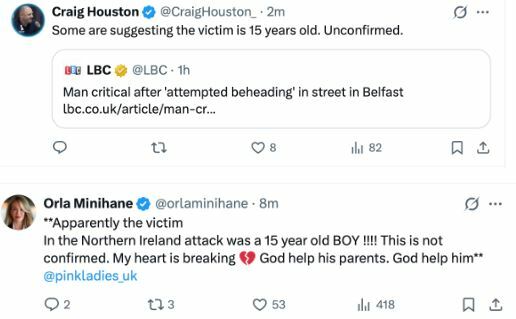
The speed at which disinformation spreads on social media indicates additional platform failures. Quickly, several large accounts inaccurately claimed that the victim was a teenage boy of 15. Records later showed that the victim was in his 40s.
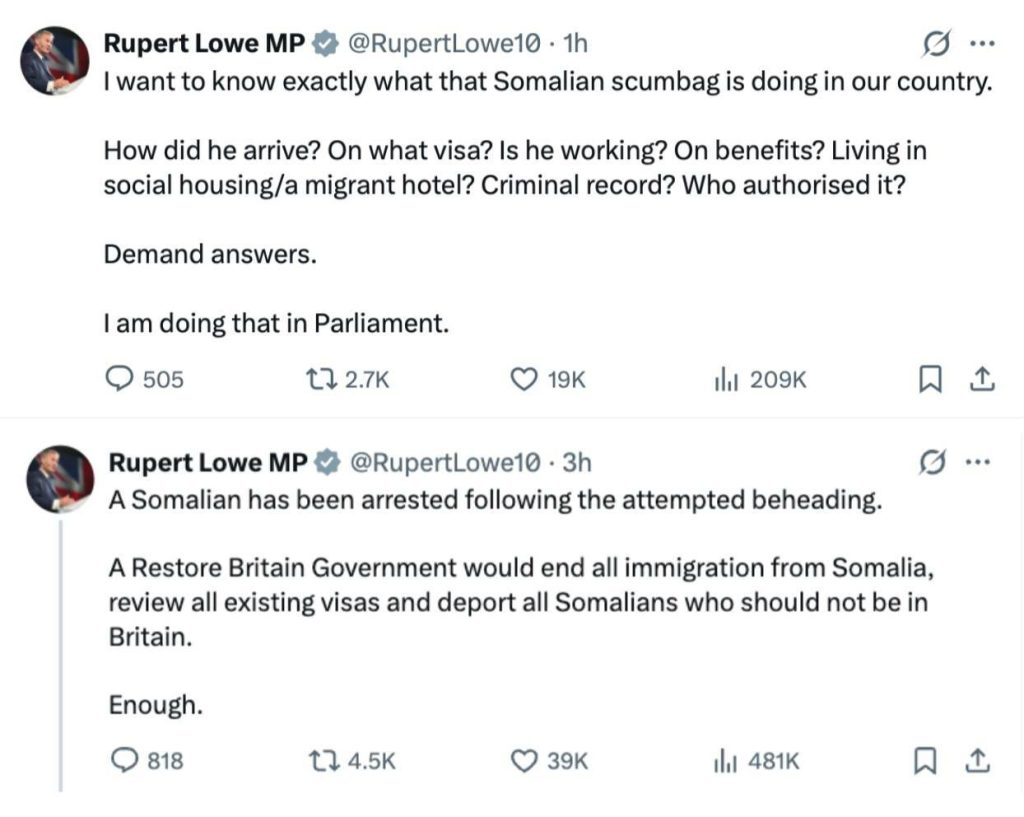
Additionally, the PSNI falsely announced that the attacker was thought to be of Somali origin, resulting in a barrage of anti-Somali hate online. This included leader of Restore Britain, Rupert Lowe MP, claiming that his party would deport all Somalis. Three hours later, this was corrected to say that he was of Sudanese origin, many far-right actors doubled down to claim that it did not matter which country he was from, only that he was not white.
From Moscow, Lennon reposted a photo of a man in hospital who he claimed to be Ogilvie. The photo spread quickly, but was later determined that the man pictured was not the victim from Belfast.
This was done with no concern for the privacy of either the victim photographed, nor Ogilvie and his family, who were forced to condemn the disinformation being spread about his condition.
The horrific stabbing in Belfast has had profound effects on communities, both in Belfast and more widely. The graphic footage was made easily available to both adults and children online, transforming a terrifying attack into a screengrab to be swapped on social media platforms.
In what is now a familiar pattern, the victim’s ordeal was used to justify mass violence against racialised communities, both in Belfast and across the UK. This was despite pleas from the victim’s family not to engage in violence or disorder.
On the same night as racist attacks in Belfast, around 300 masked men took to the streets of Glasgow. Three were arrested following racist assaults and public disorder. In Liverpool, protesters attempted to steal the bags of Deliveroo drivers while hurling racist abuse. In Bolton, an Imam’s home was subject to an arson attack.
Far-right groups exploited local anger to encourage racially motivated attacks, and many took to social media in the days following to jeer at those who had been attacked and lost their homes. Their claims to ‘protect women and children’ are exposed as lies in the face of young families made homeless.
Prefer to listen? Click the play button to hear the audio version. Harry Shukman Reform UK is staffed by oddballs and enigmas, but none odder…